Please note: due to changes in regulations and constant design developments, we sometimes need to change details such as binding and inlay materials.

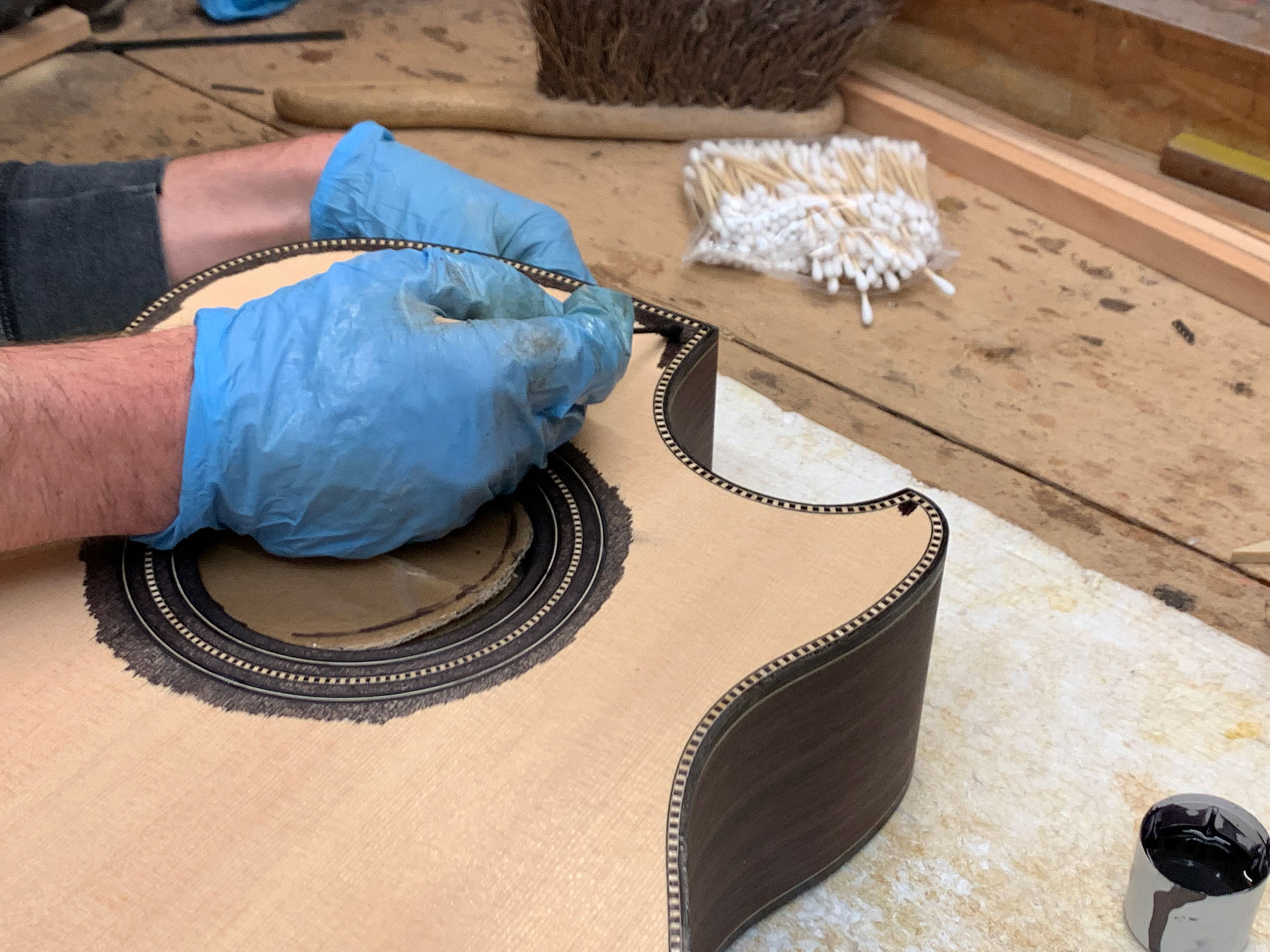
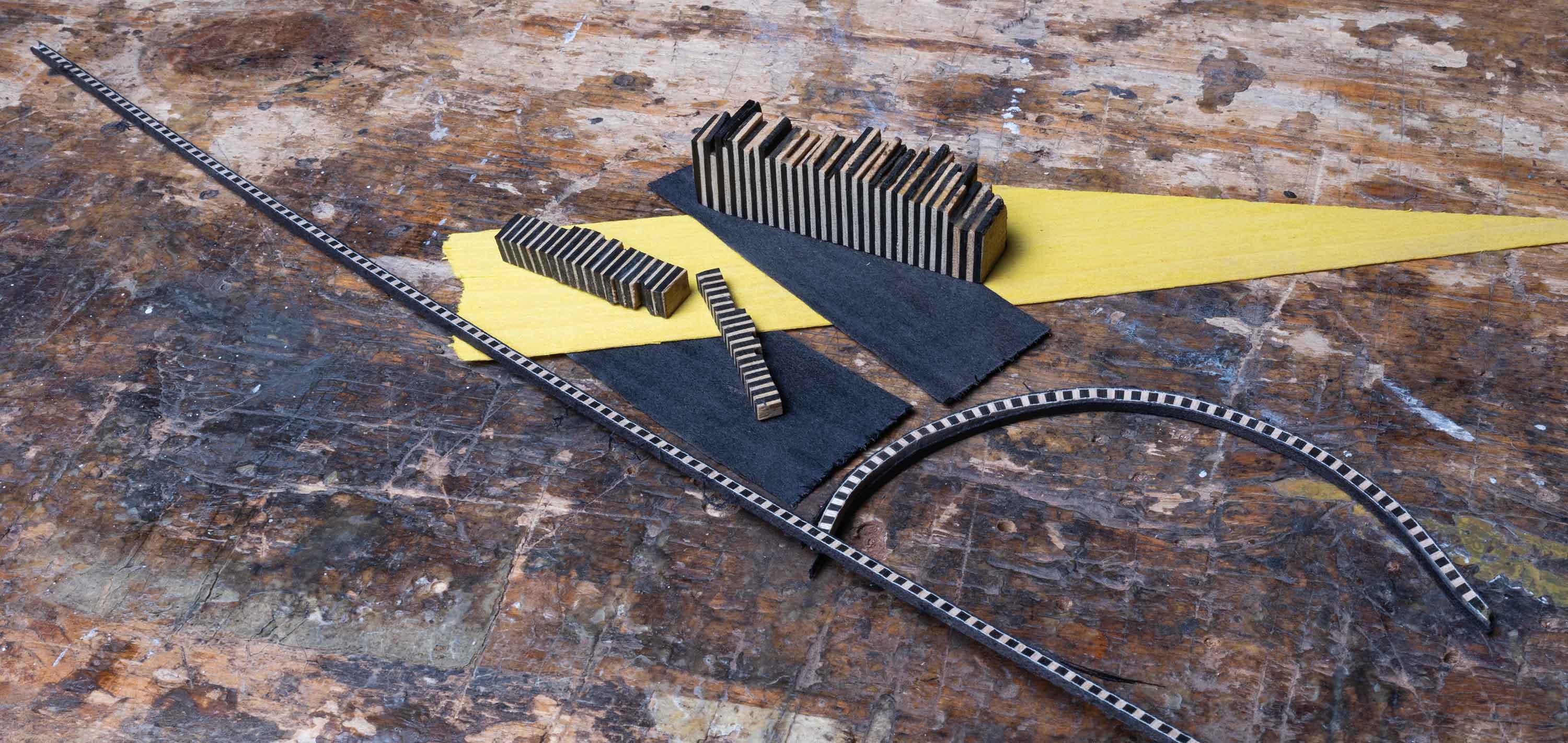
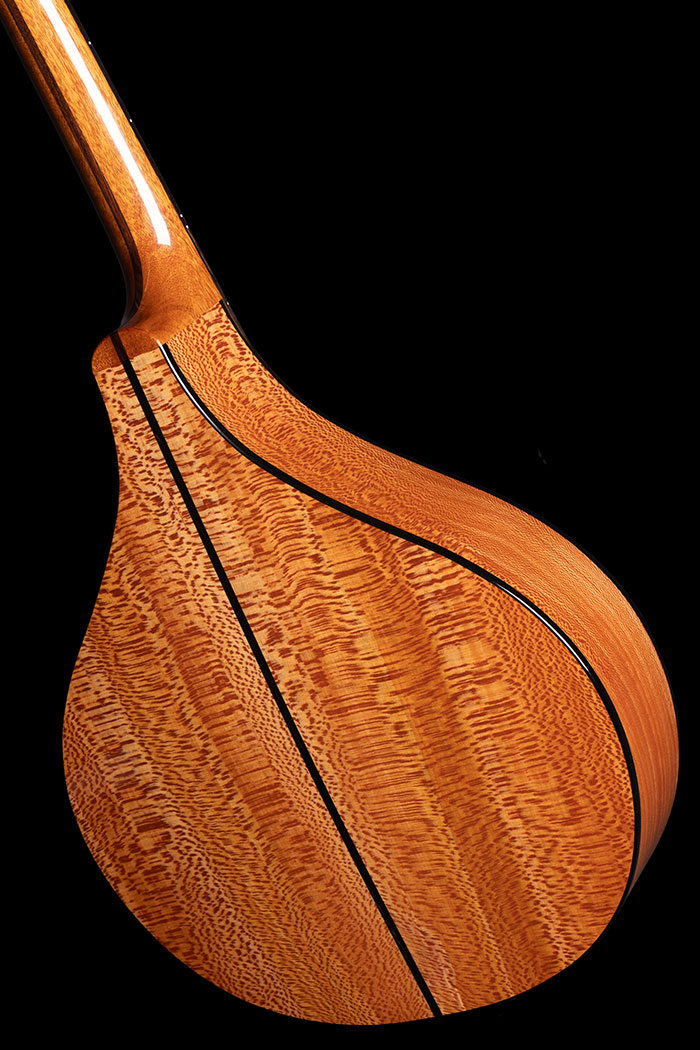
Made in 2007 and a rather splendid, even "exuberant" guitar, with staircase mosaic purfling, and deeply figured Sitka Spruce soundboard.
The back and sides are "Curly" Maple, with a matching centre section running the full length of the neck, between two sections of English Walnut.
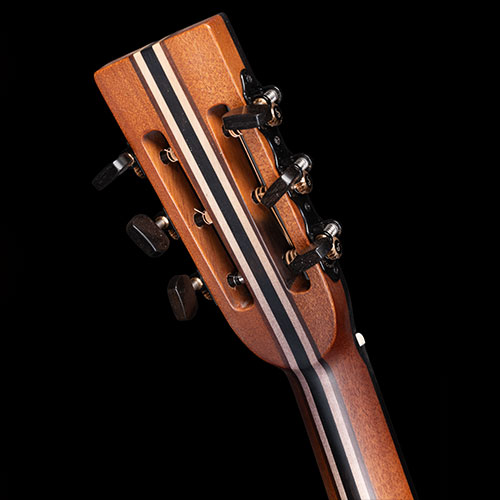
Gotoh 510 tuners. Pearl Diamond inlays on the 44mm fingerboard, Headway pickup.
Judging by the wear on the frets, it has been played "a lot", particularly at the higher positions, which is an indication of a serious player.
Refretted, and set up to suit its new owner, this wonderful “Jumbo style” guitar is for sale at £4,900.
Click on an image to enlarge ...
You've probably seen the video that Sam made with Ben and me last year, we featured it in April’s newsletter.
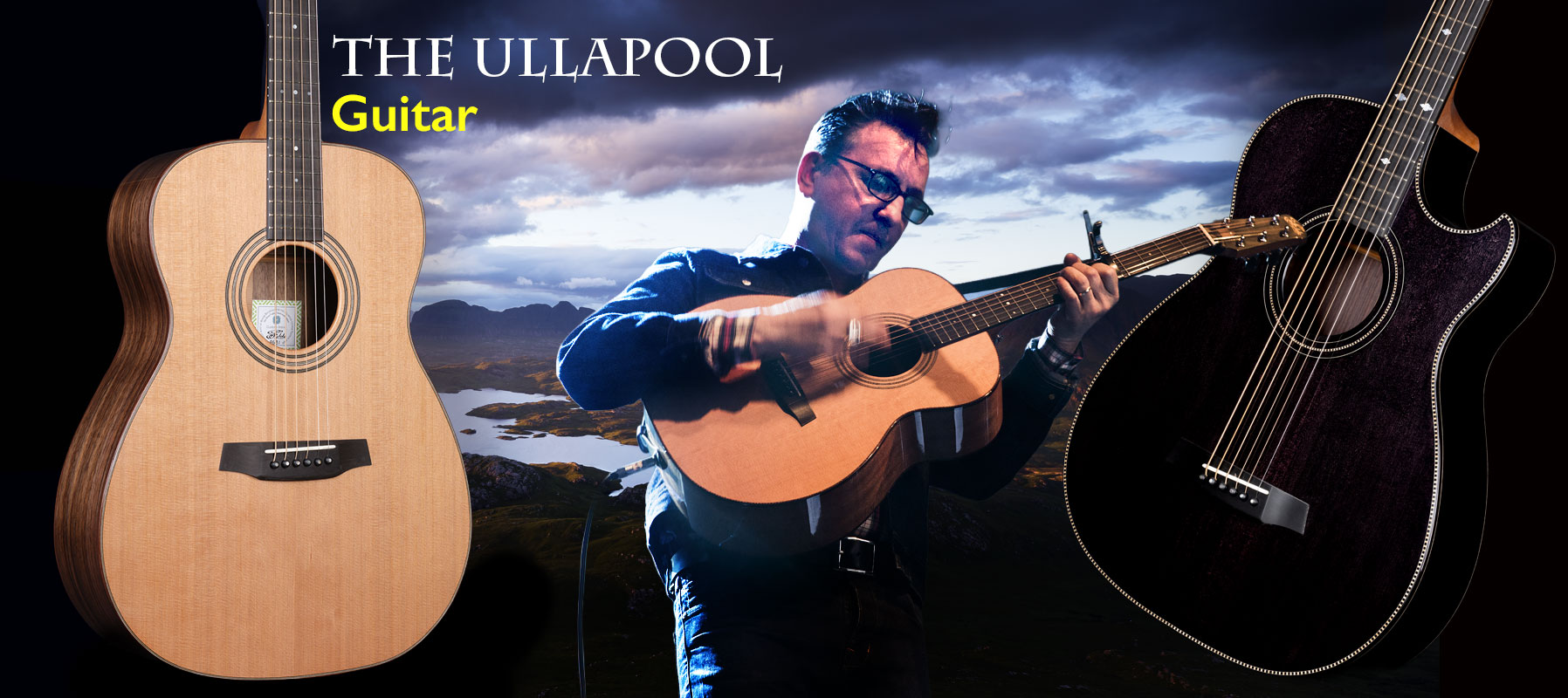
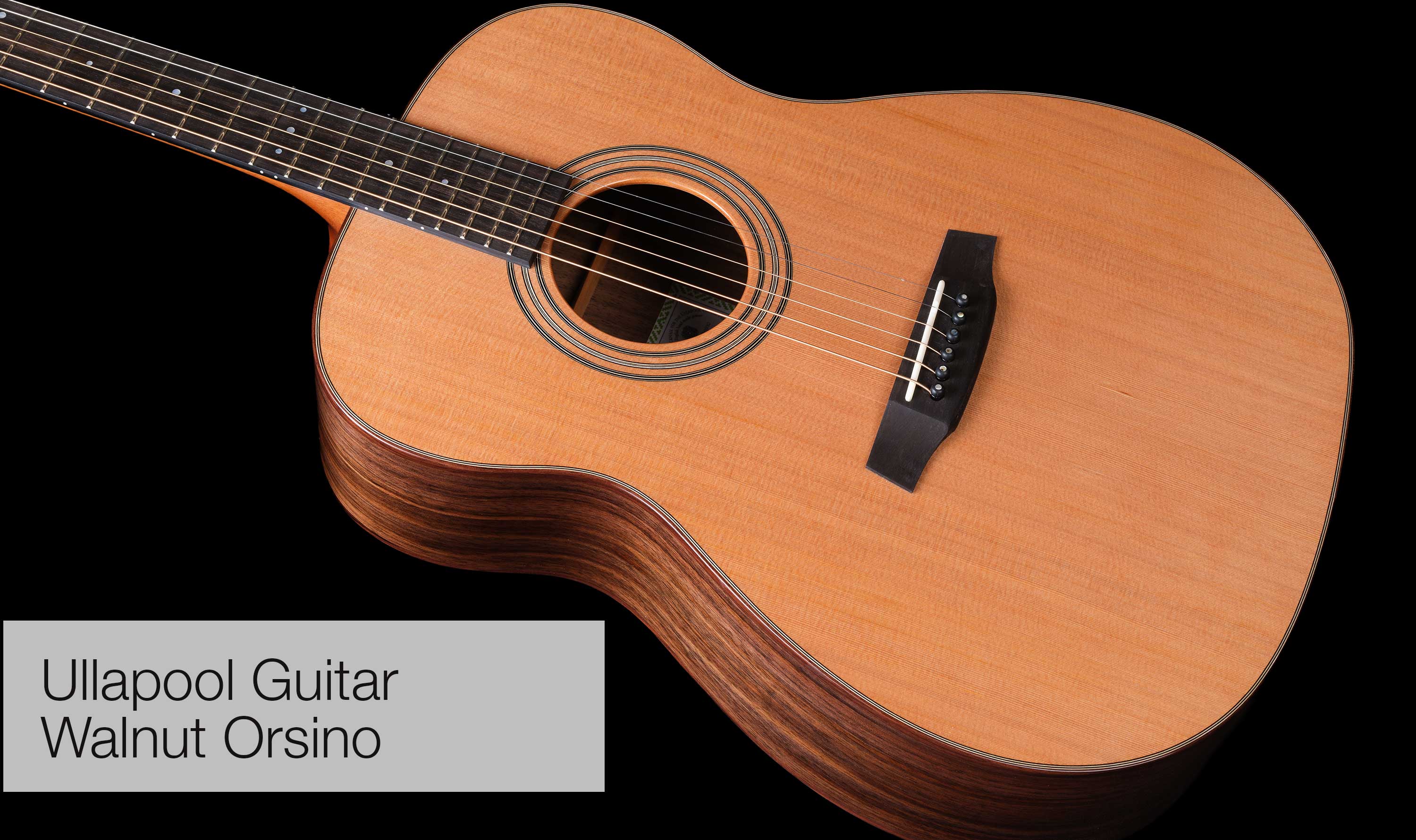
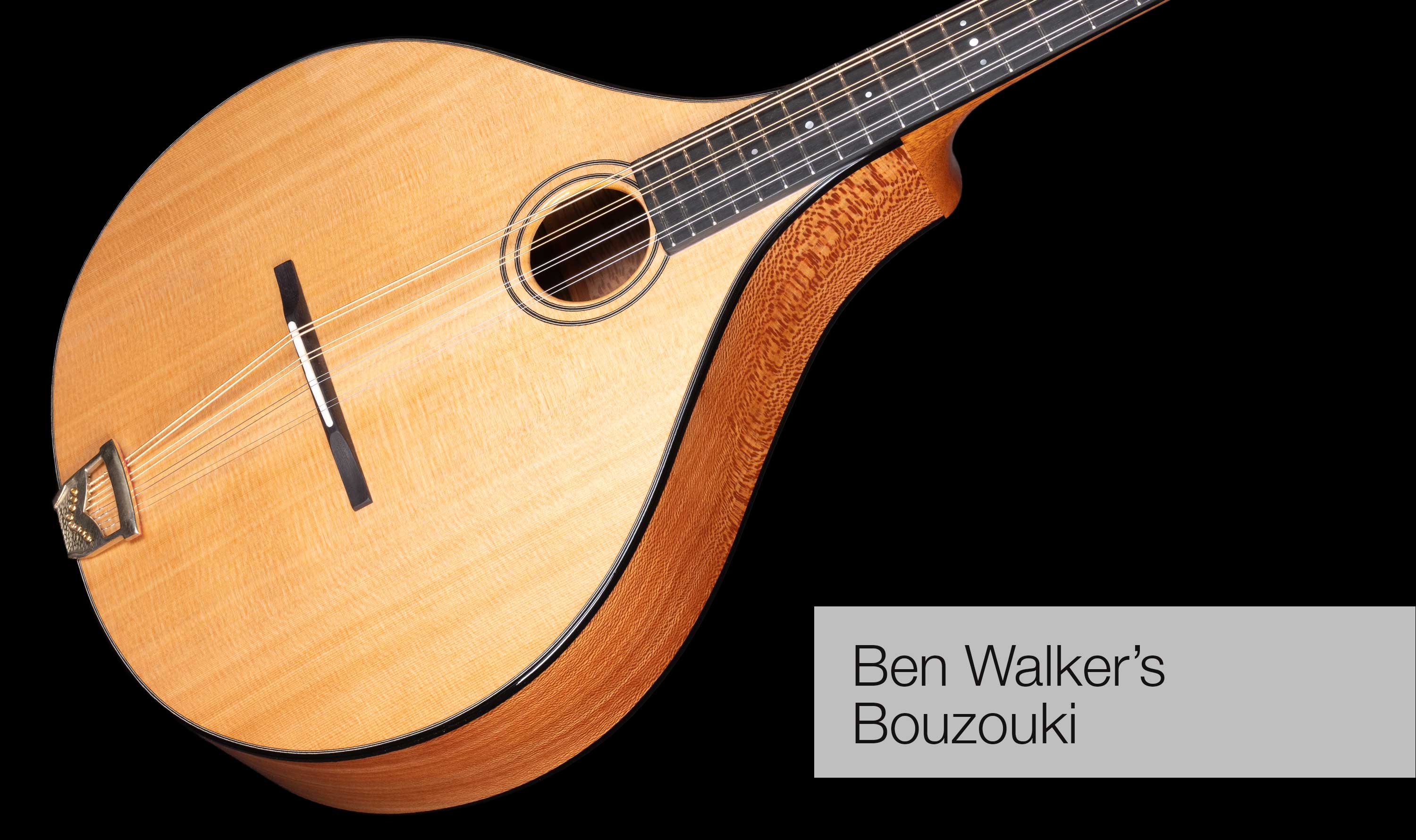
This is the guitar that came about after all that discussion, plus a lot of contact with Ben over the years.
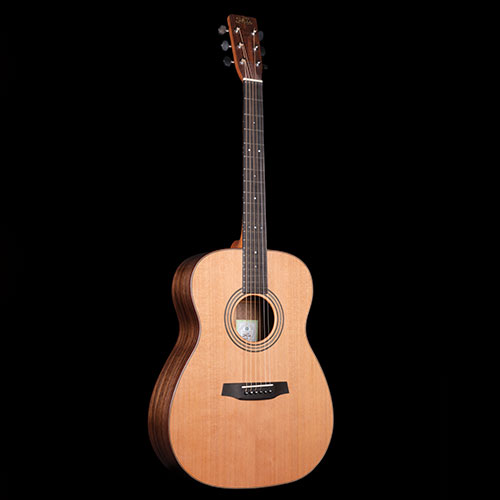
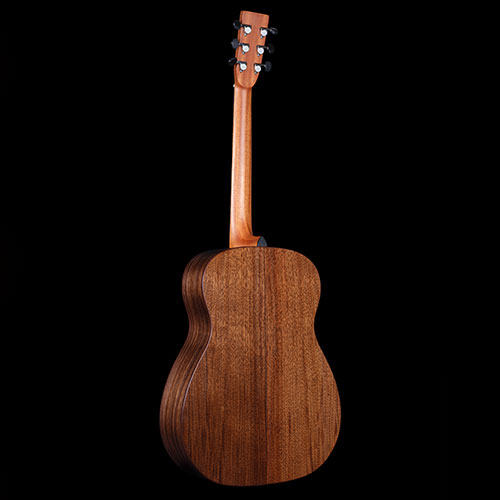
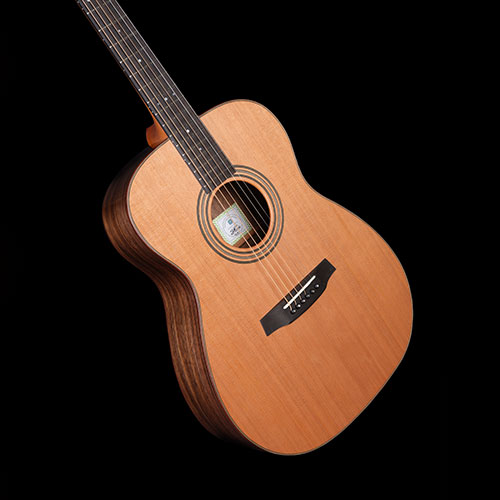
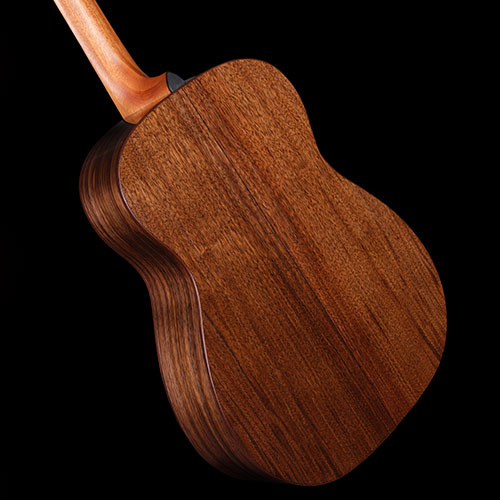
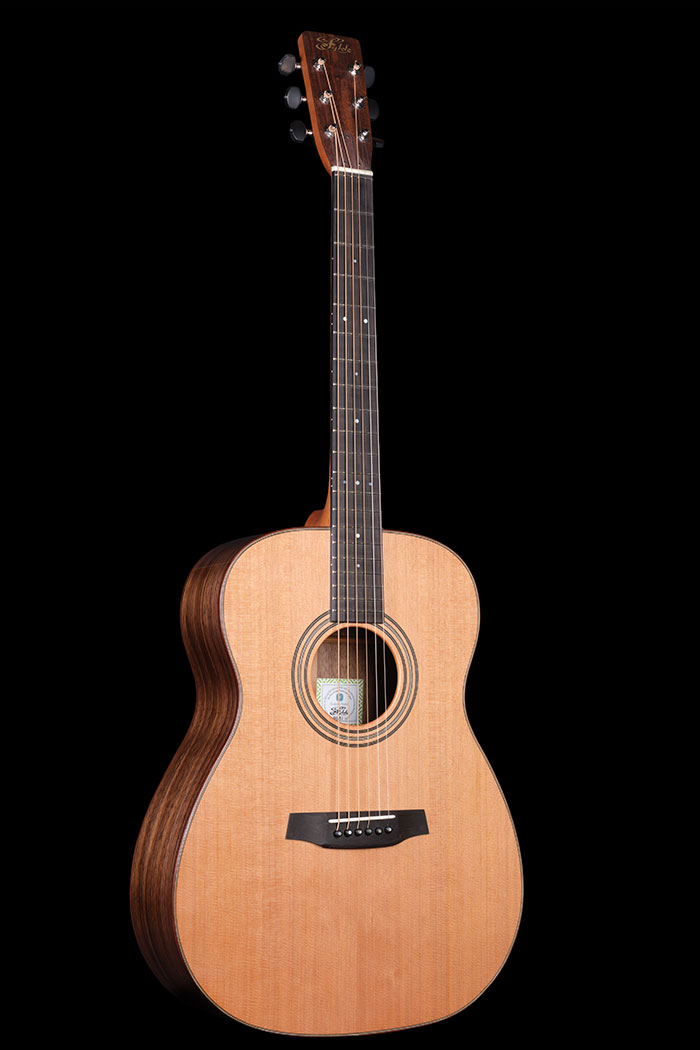
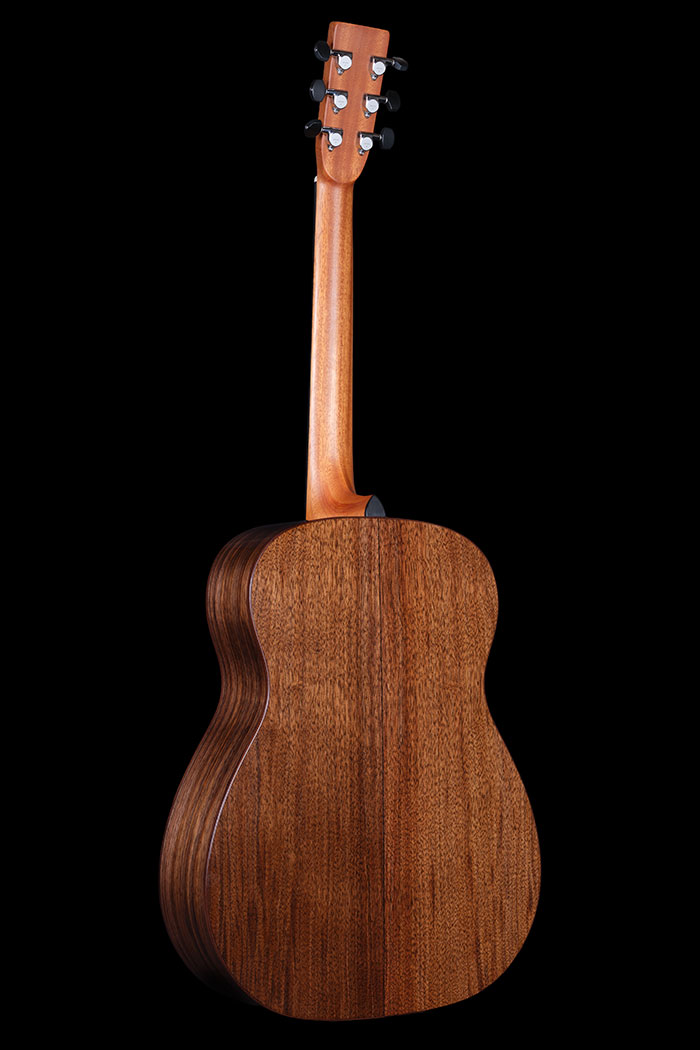
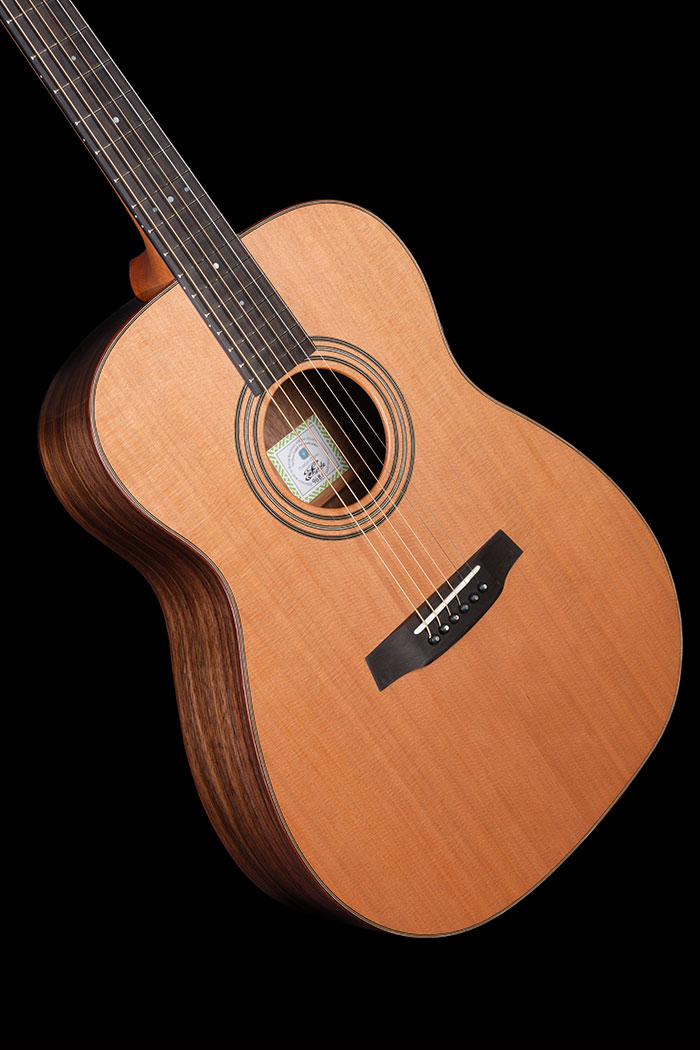
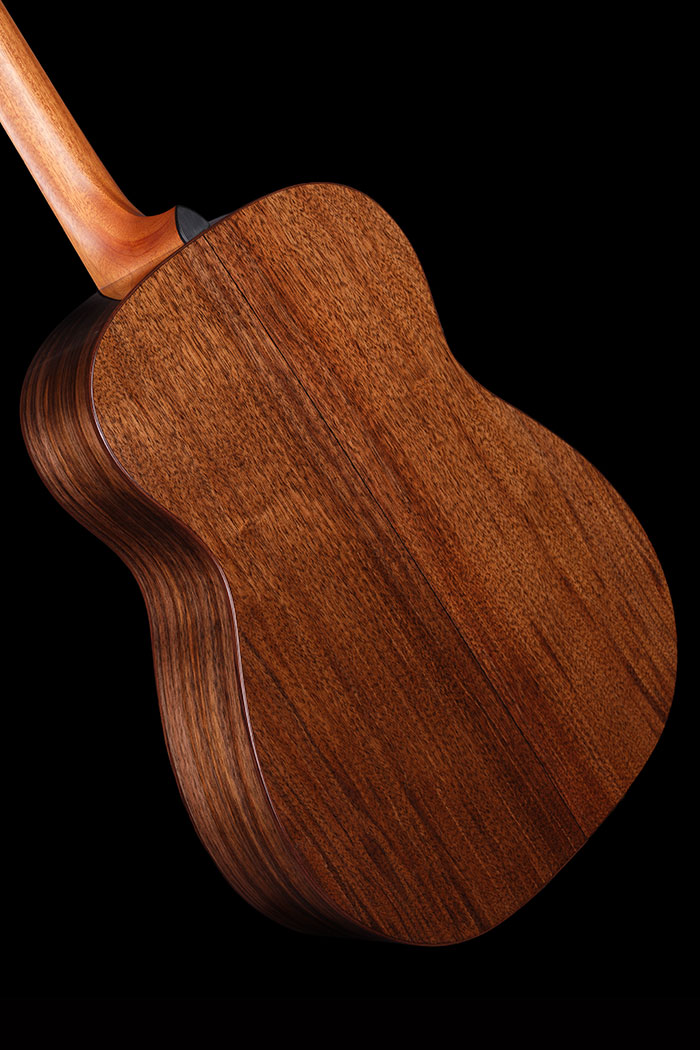
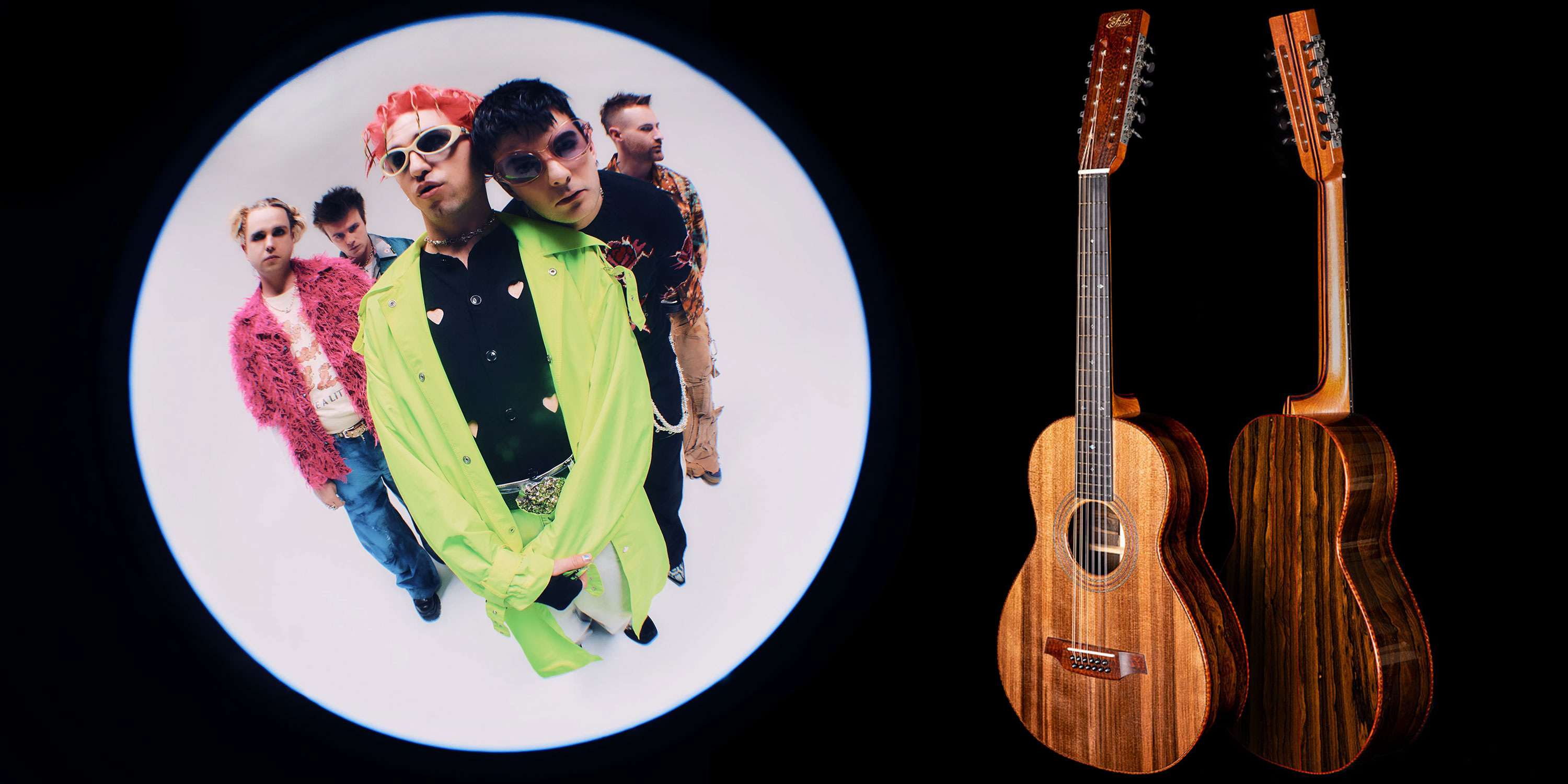
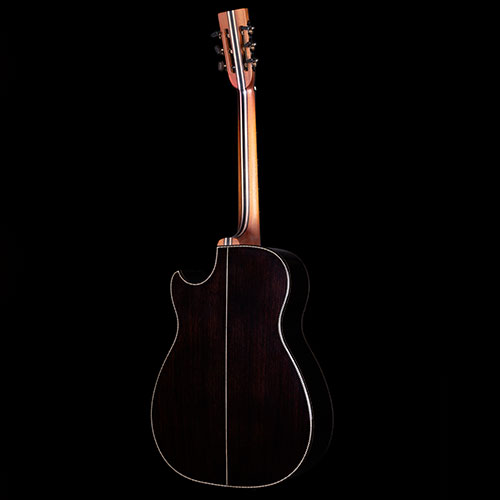
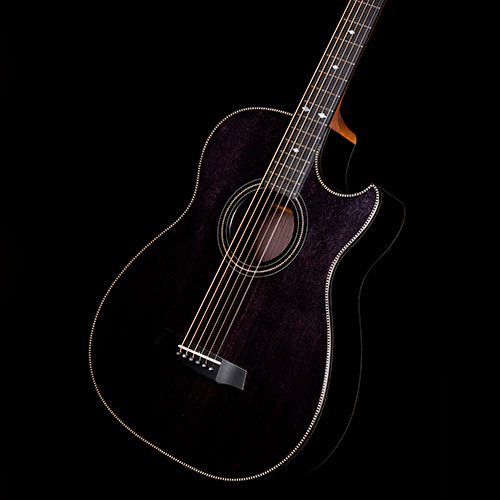
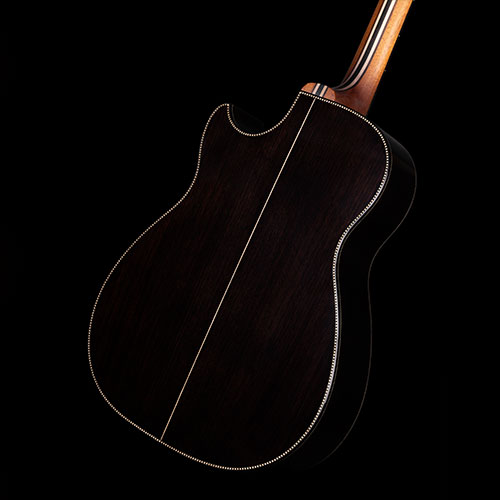
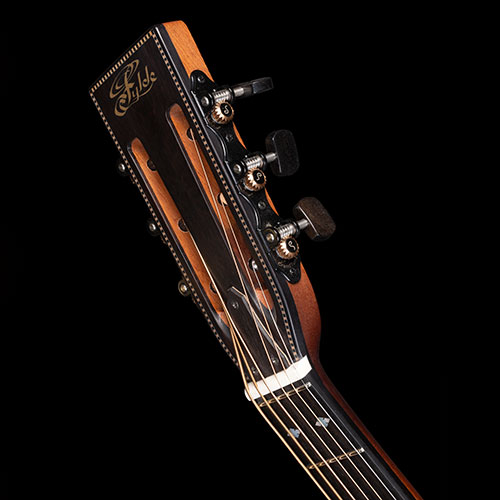
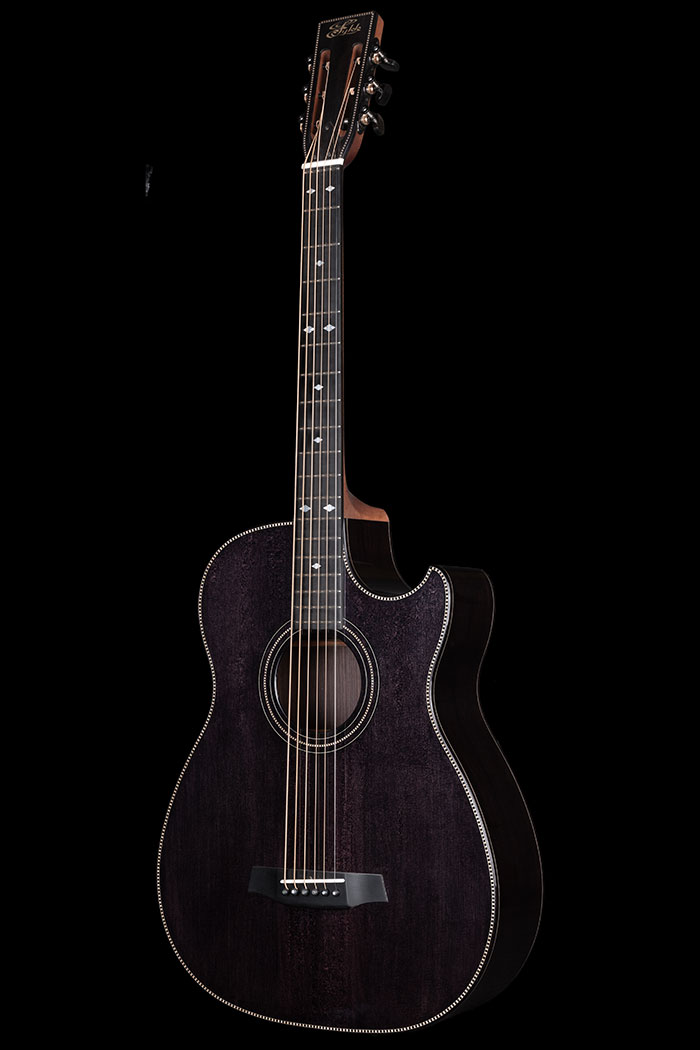
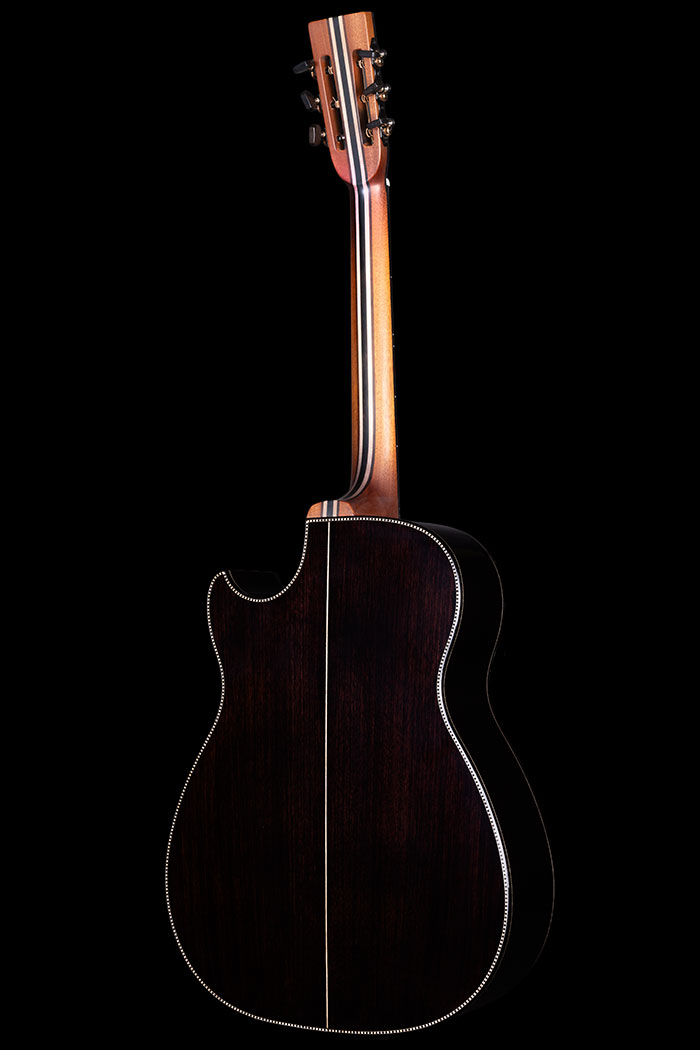
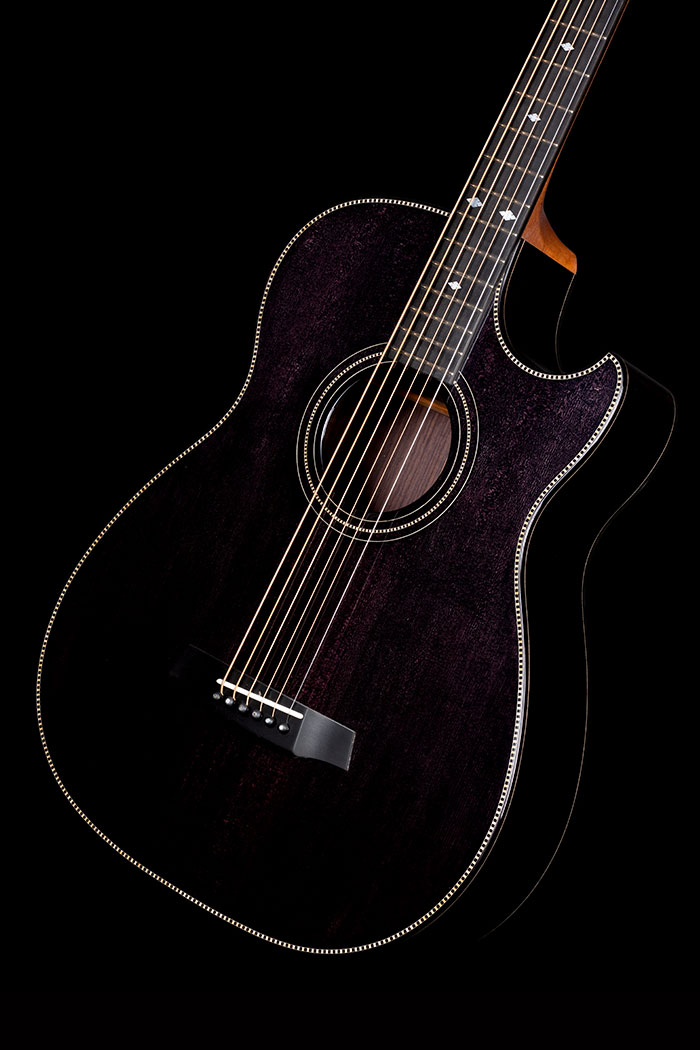
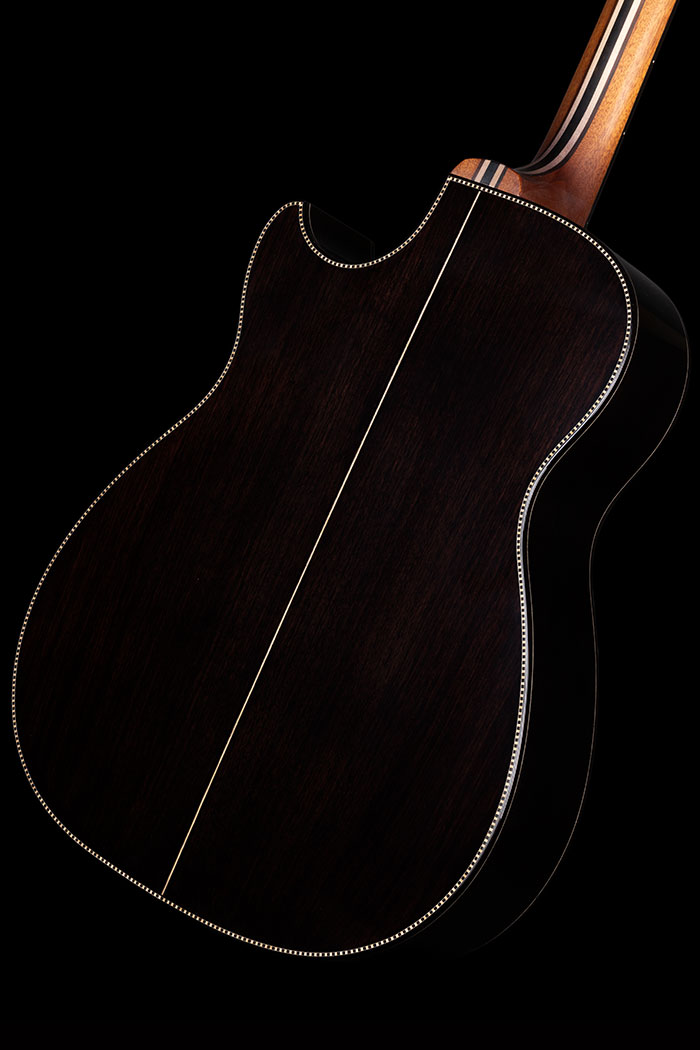
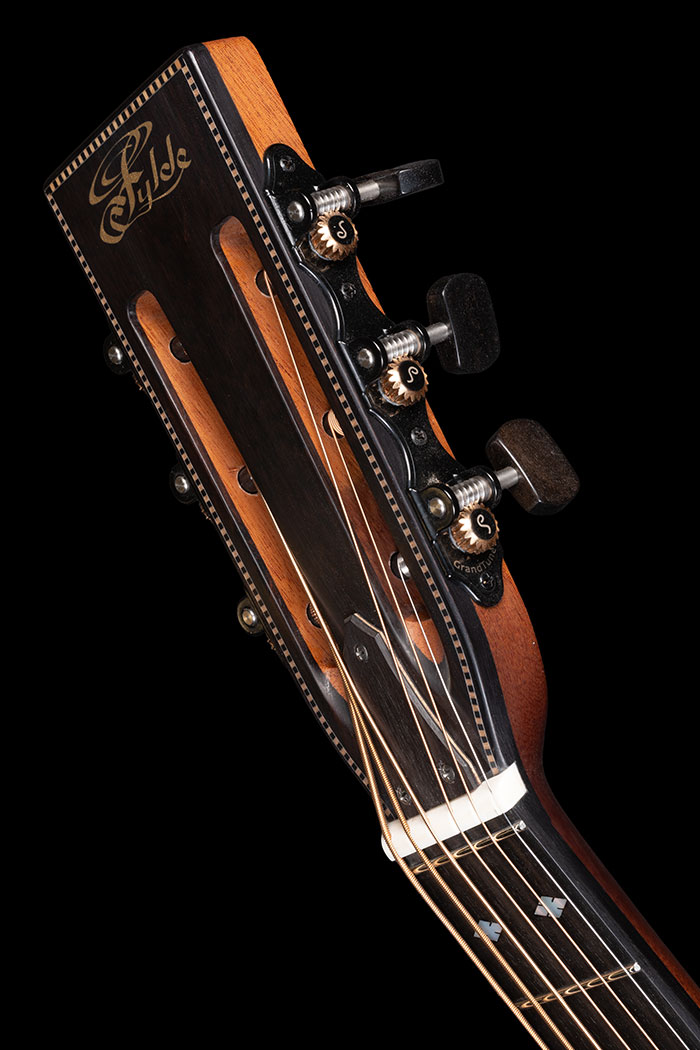
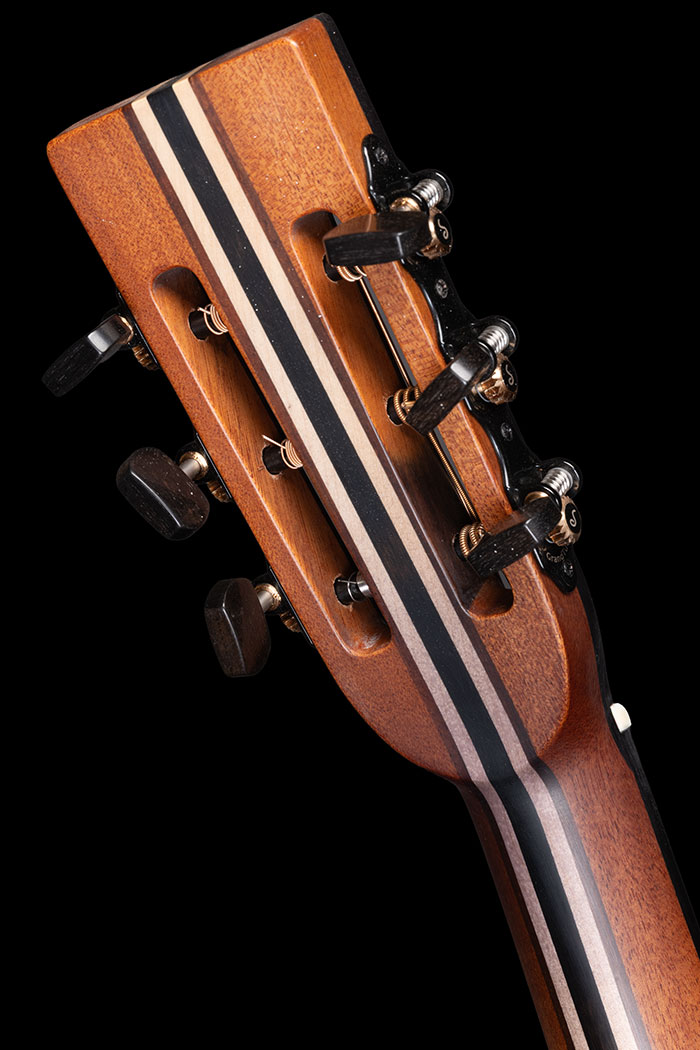
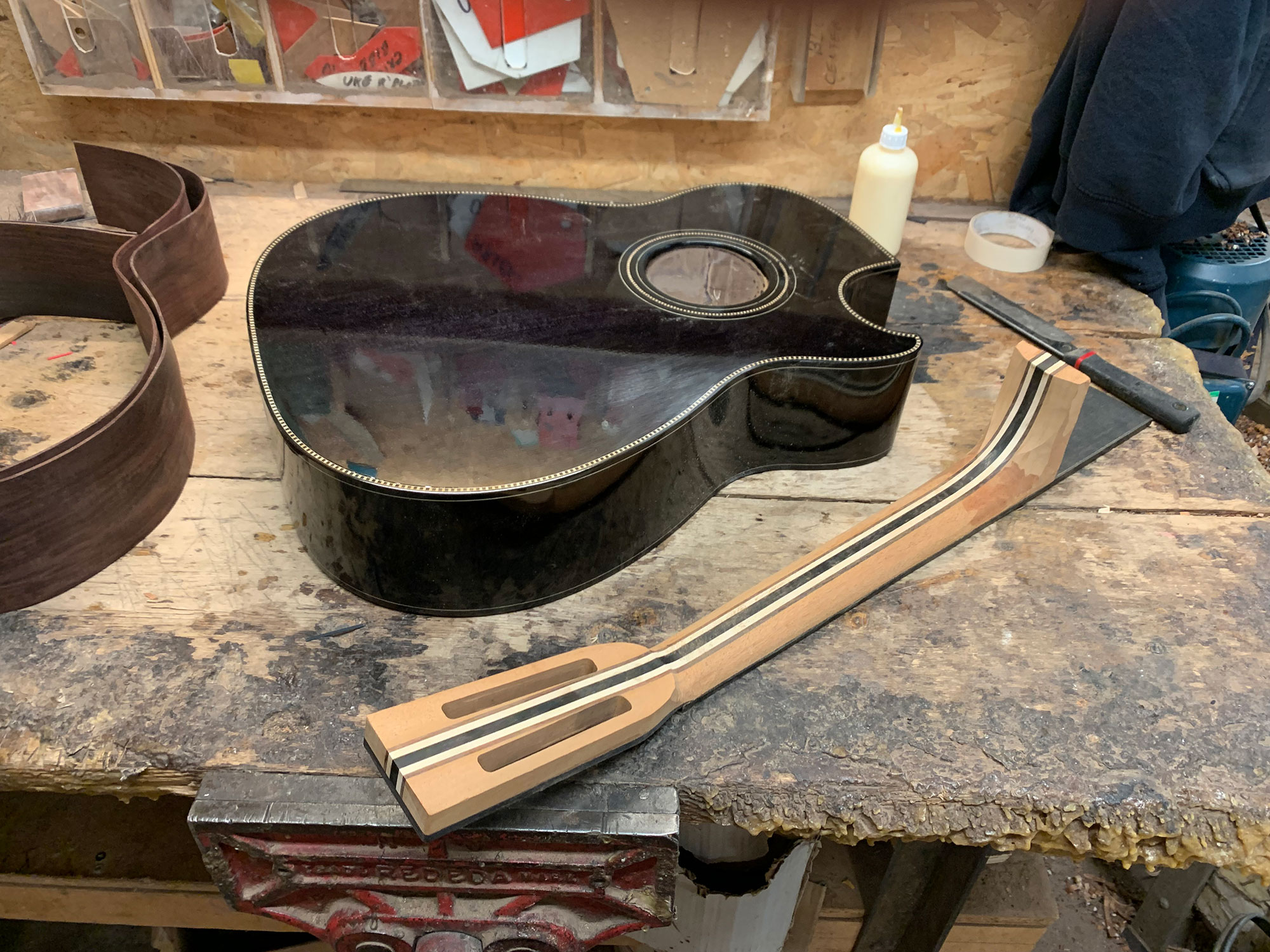
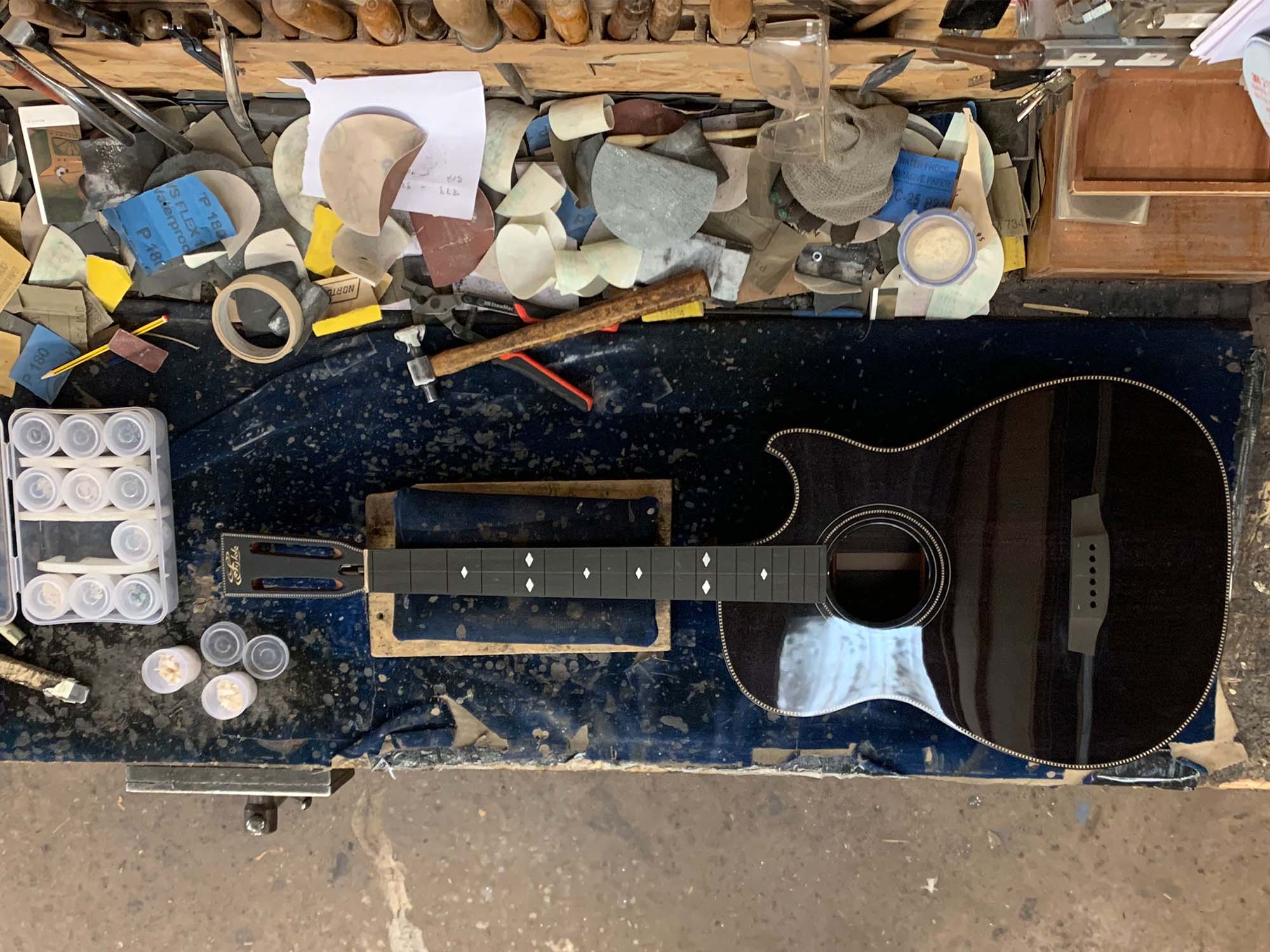
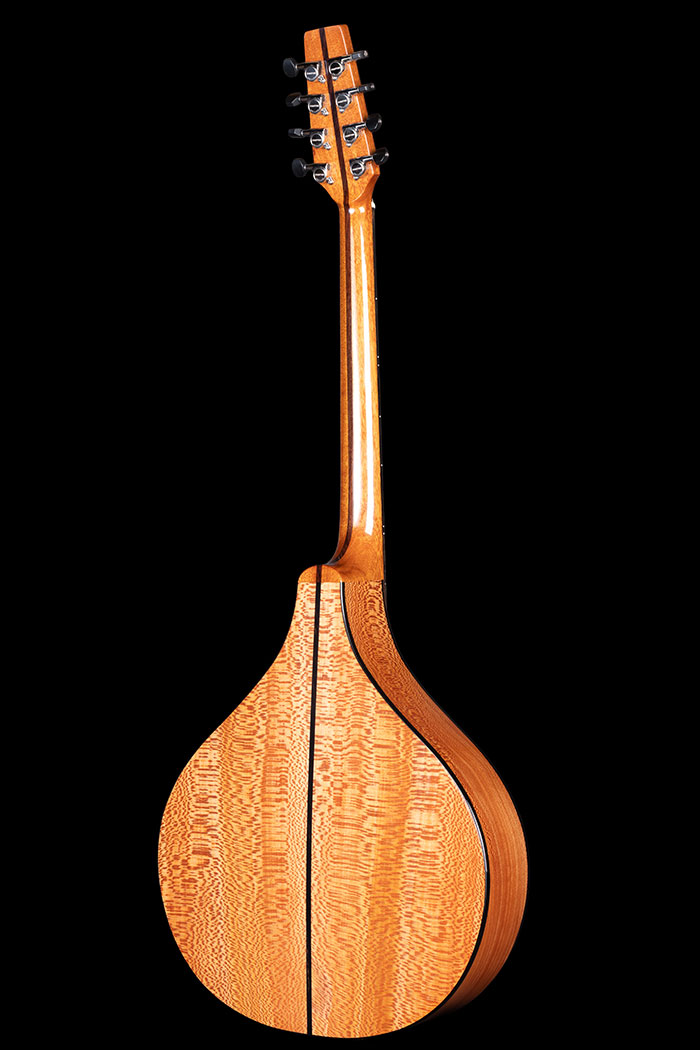
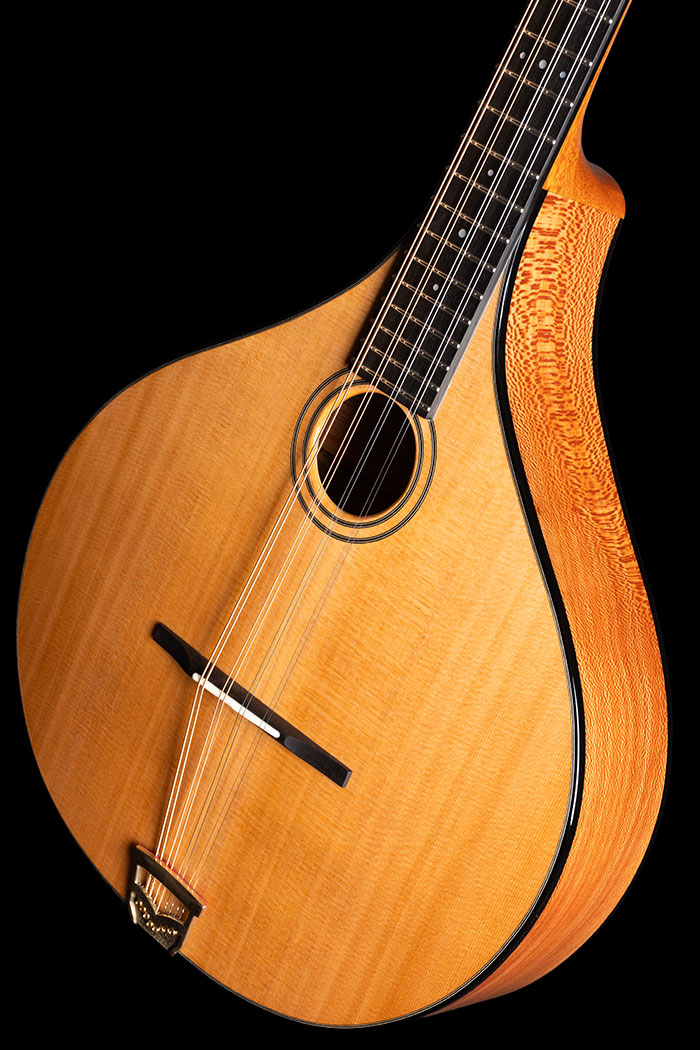
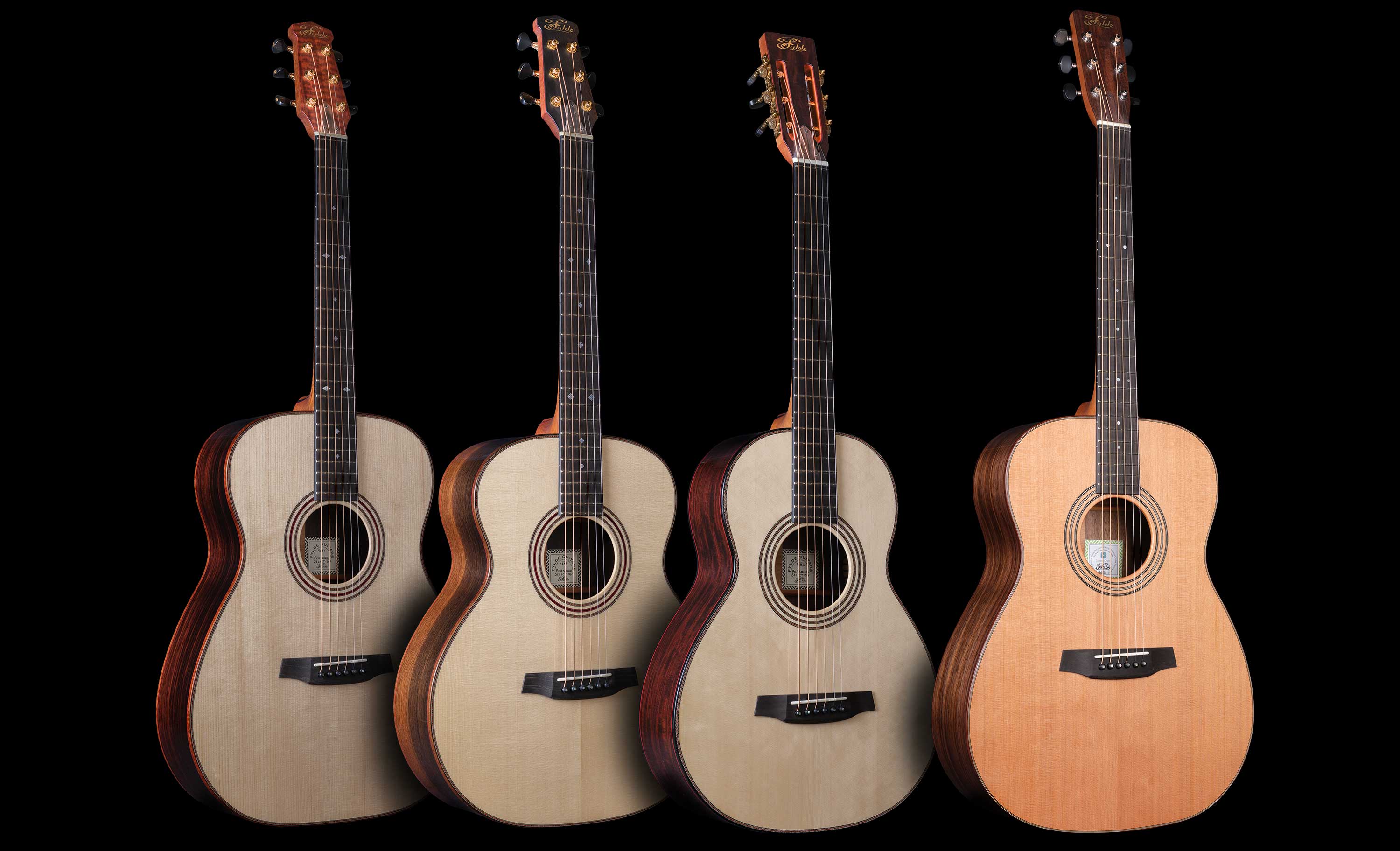
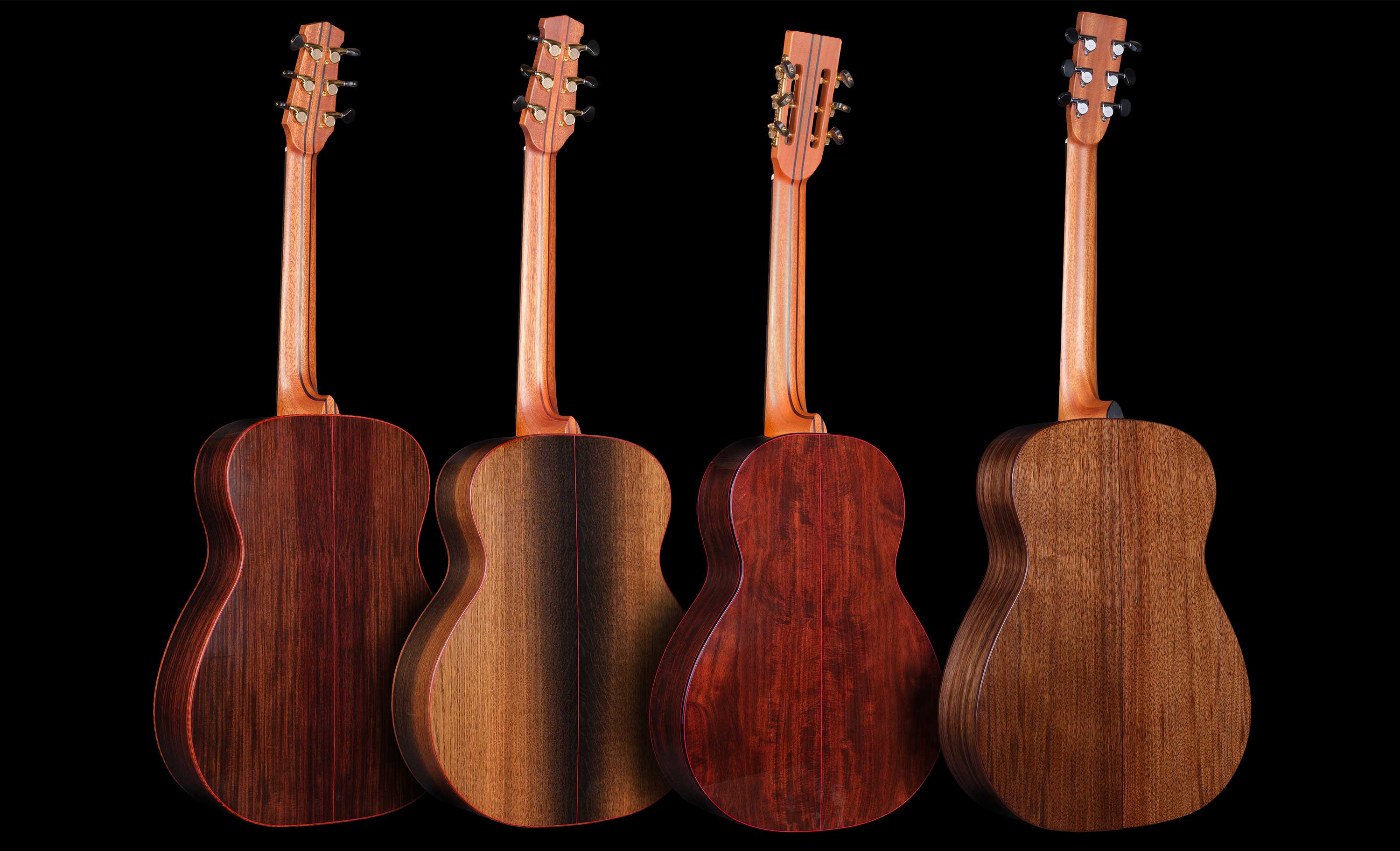
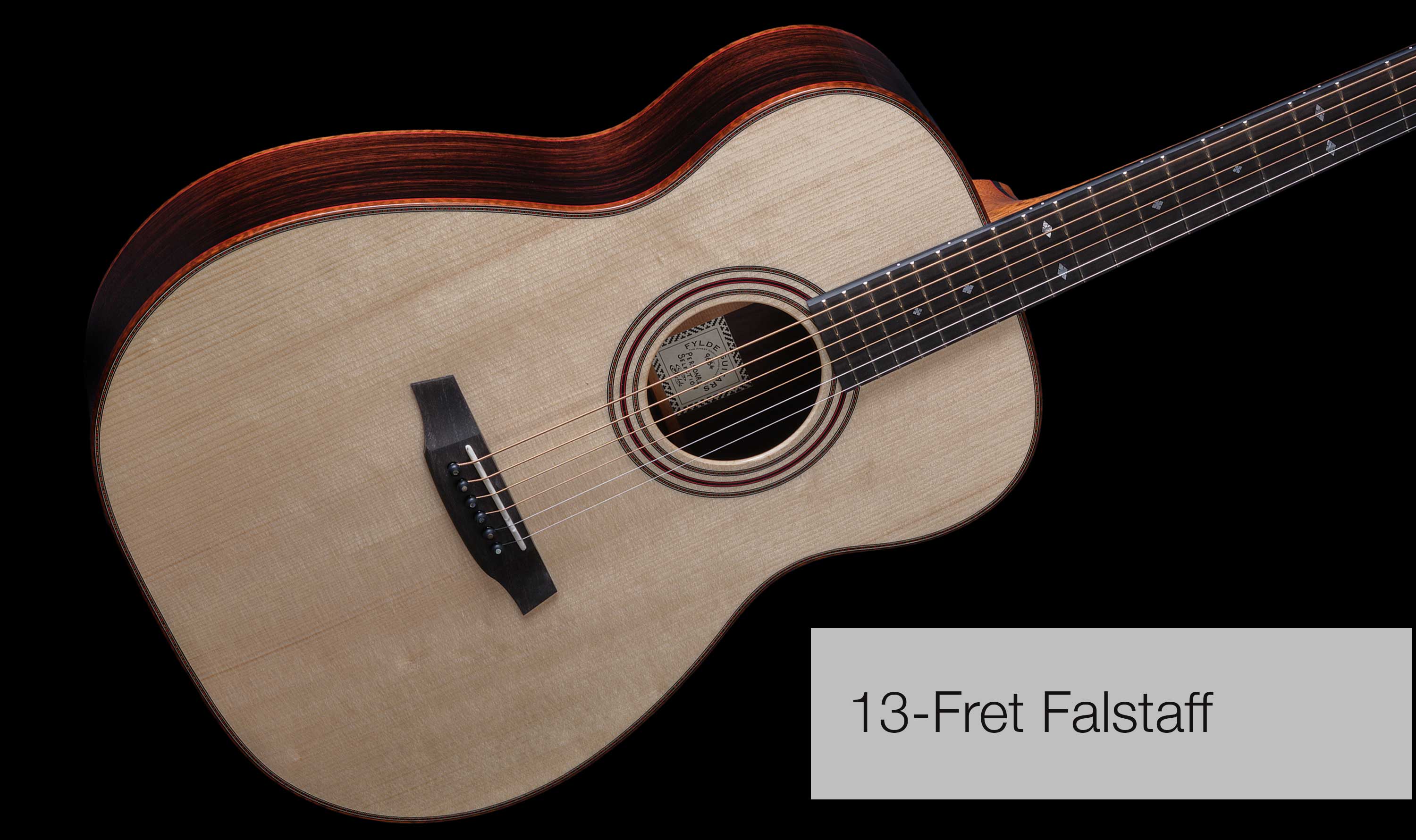
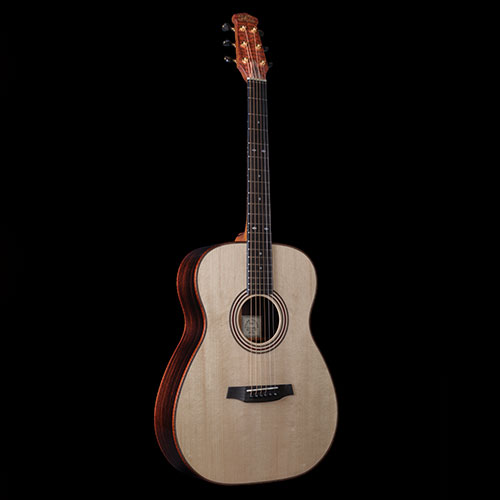
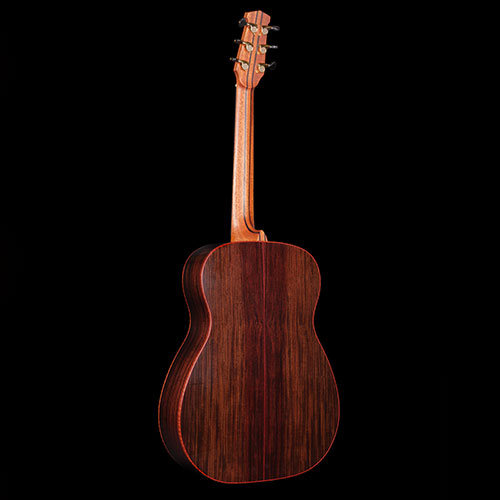
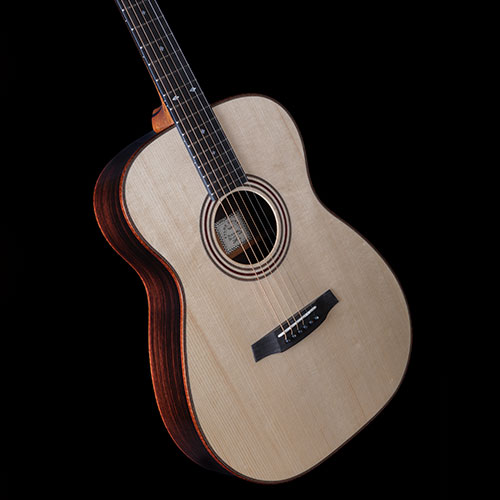
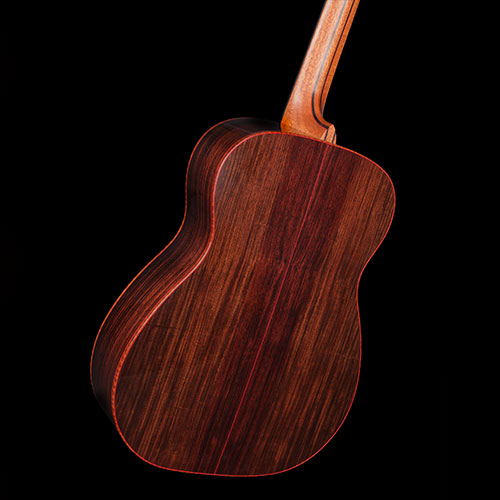
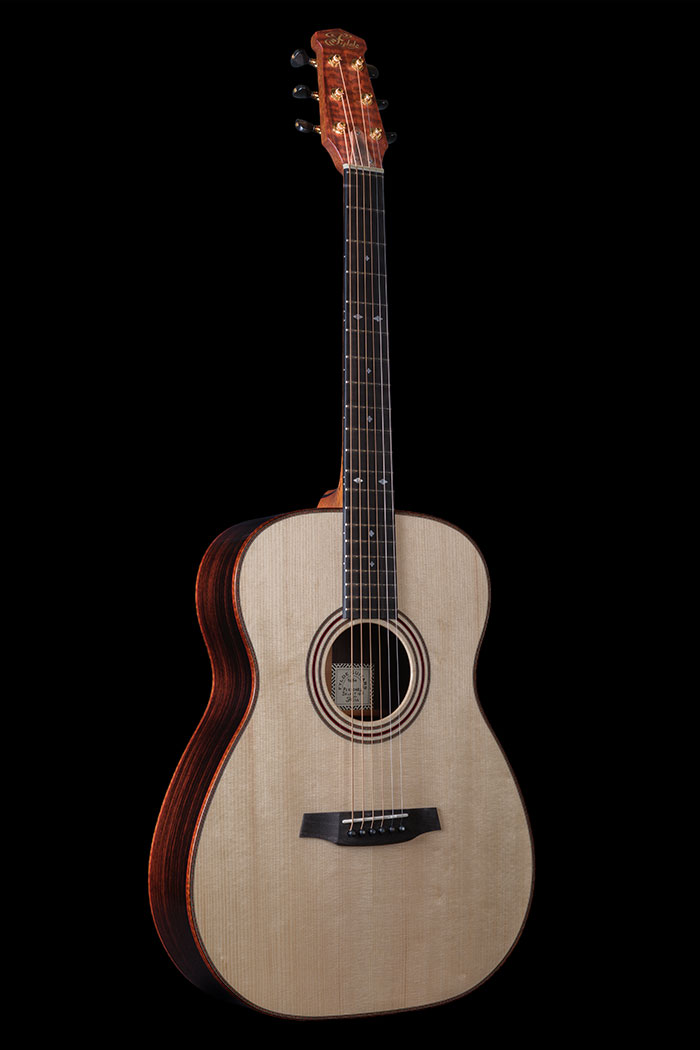
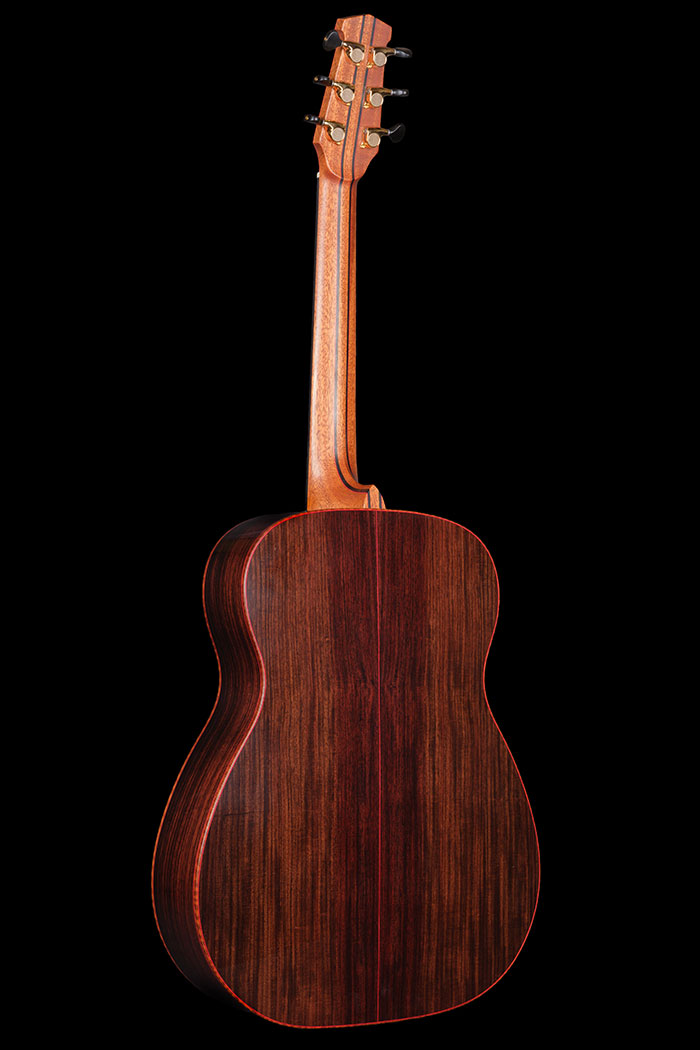
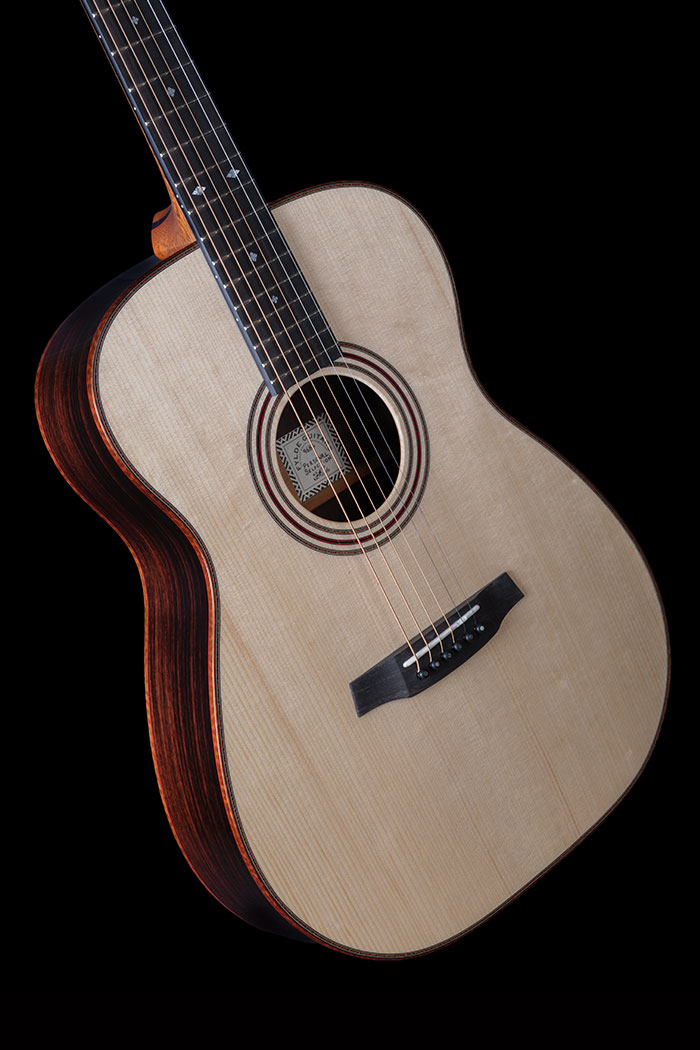
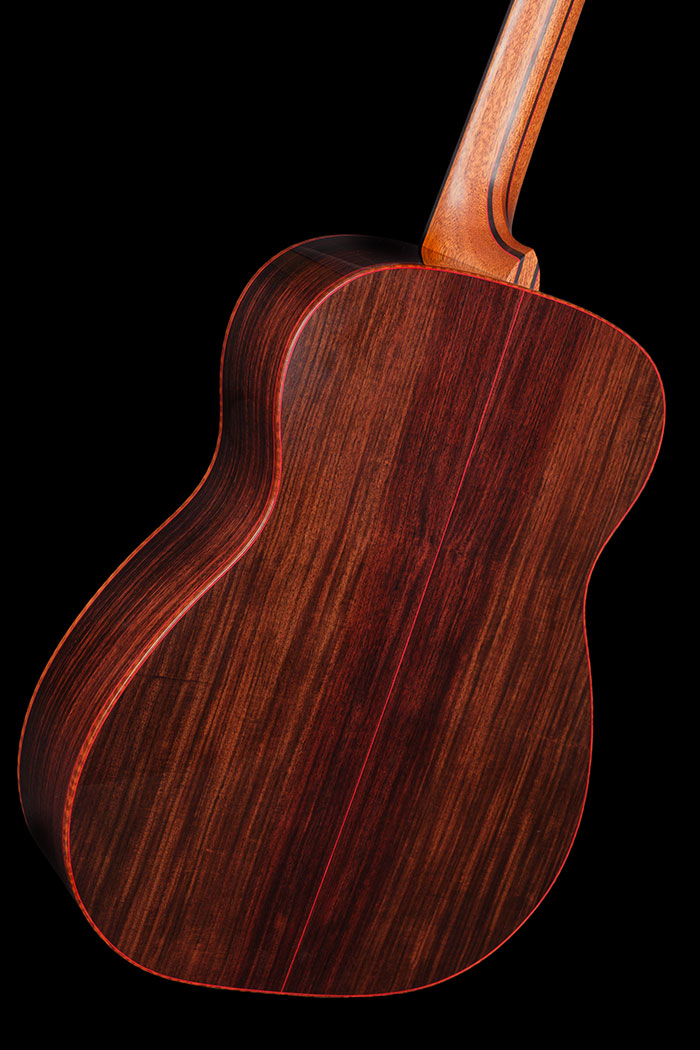
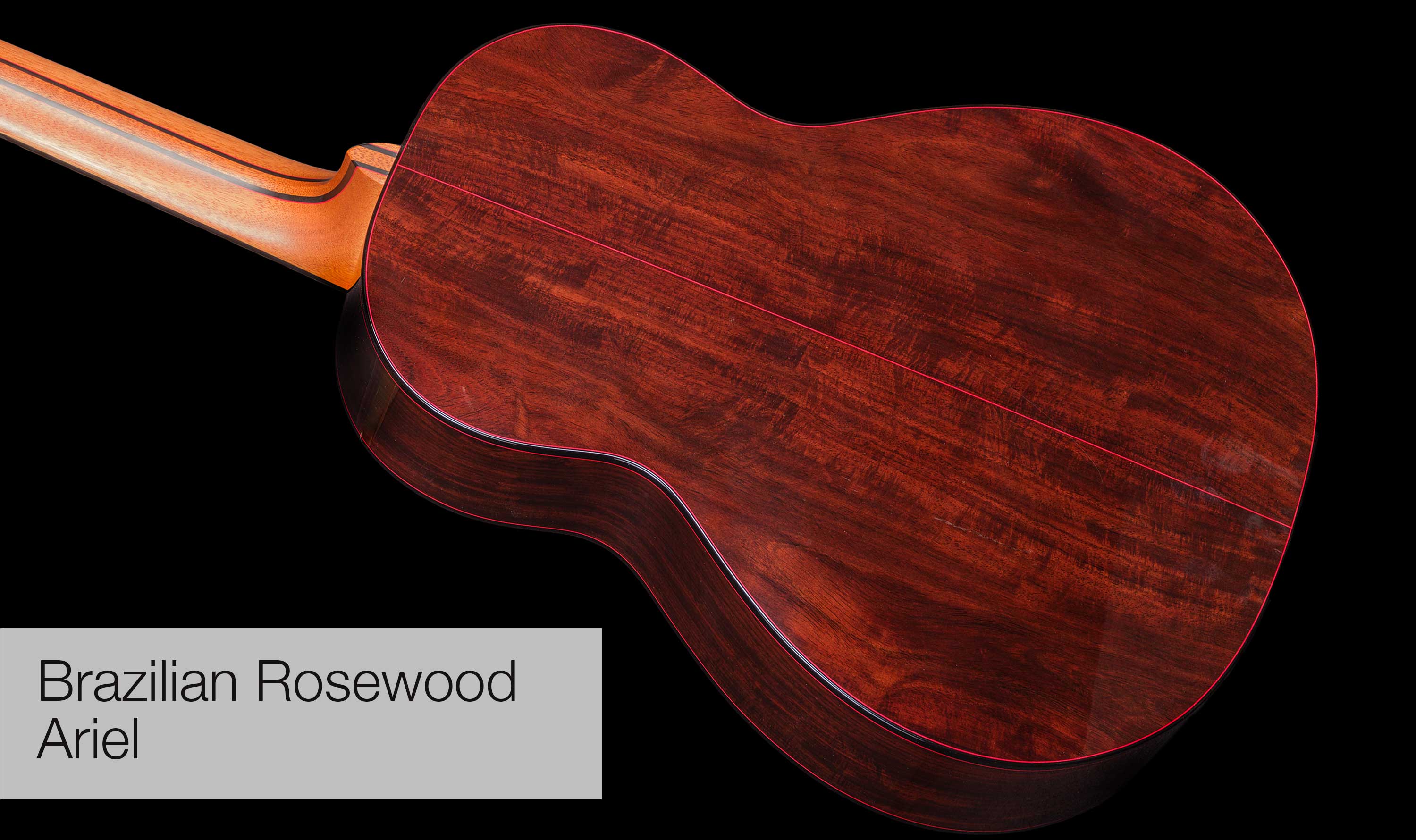
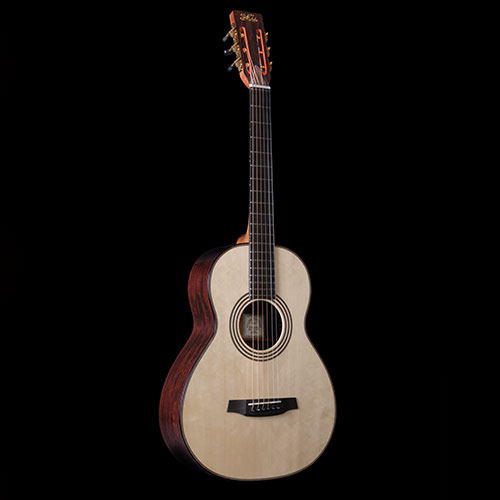
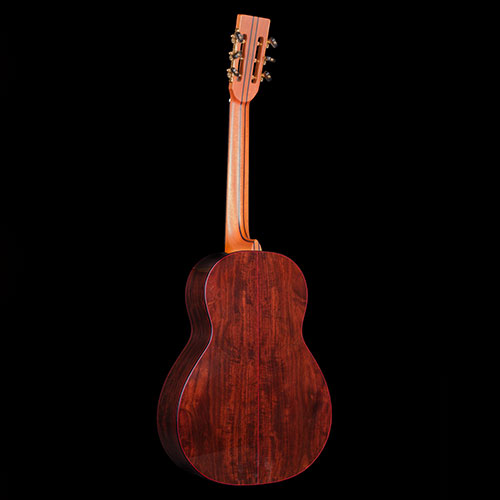
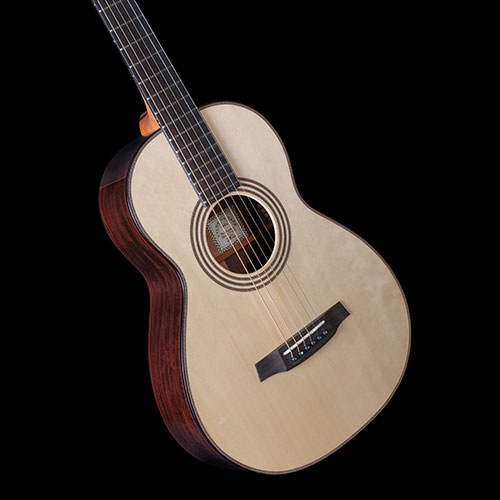
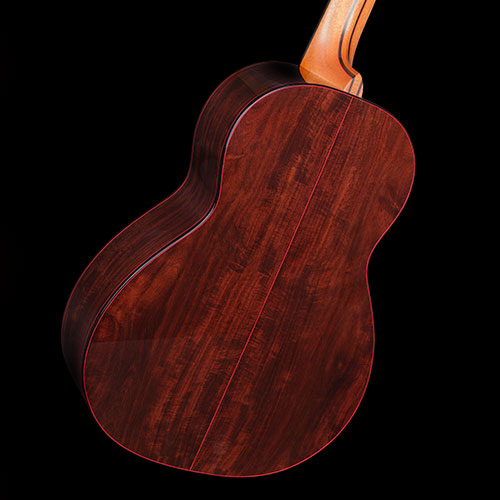
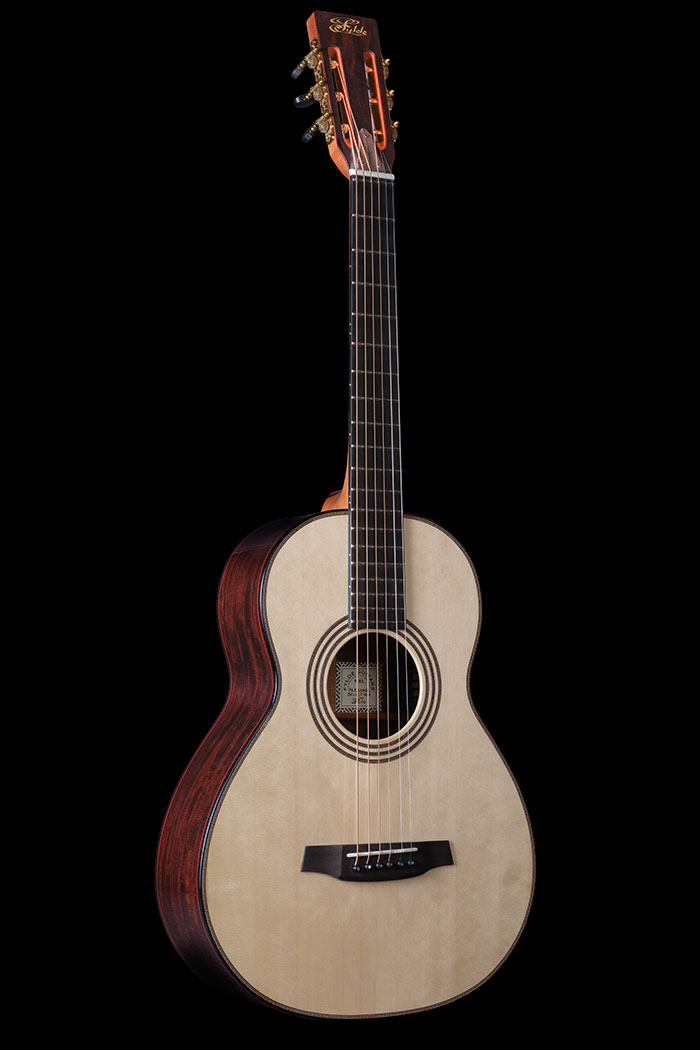
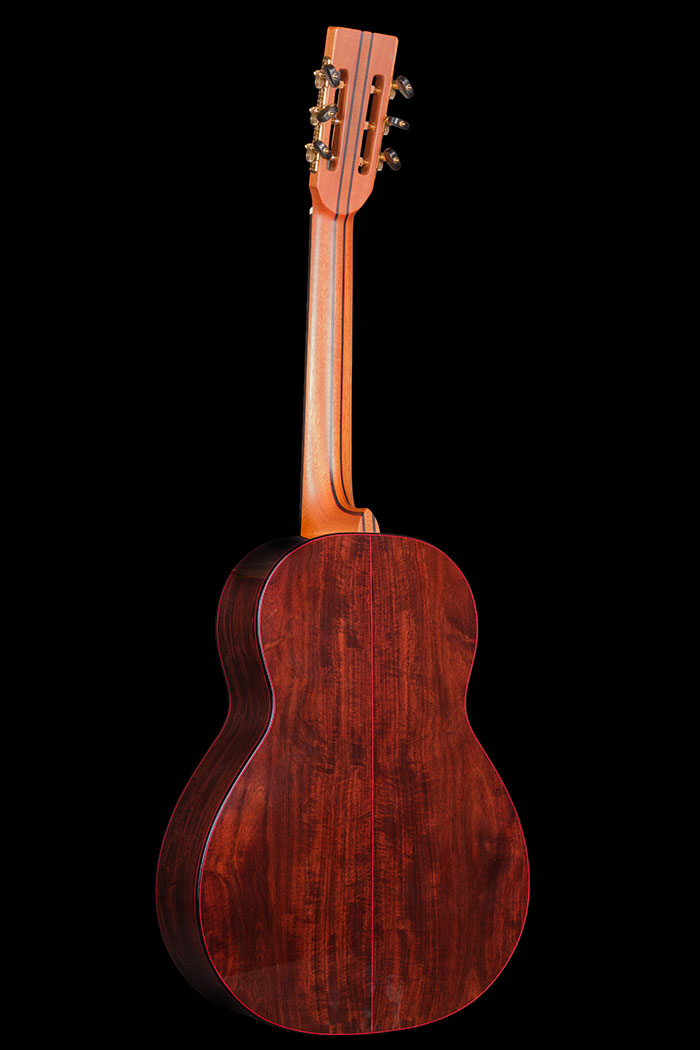
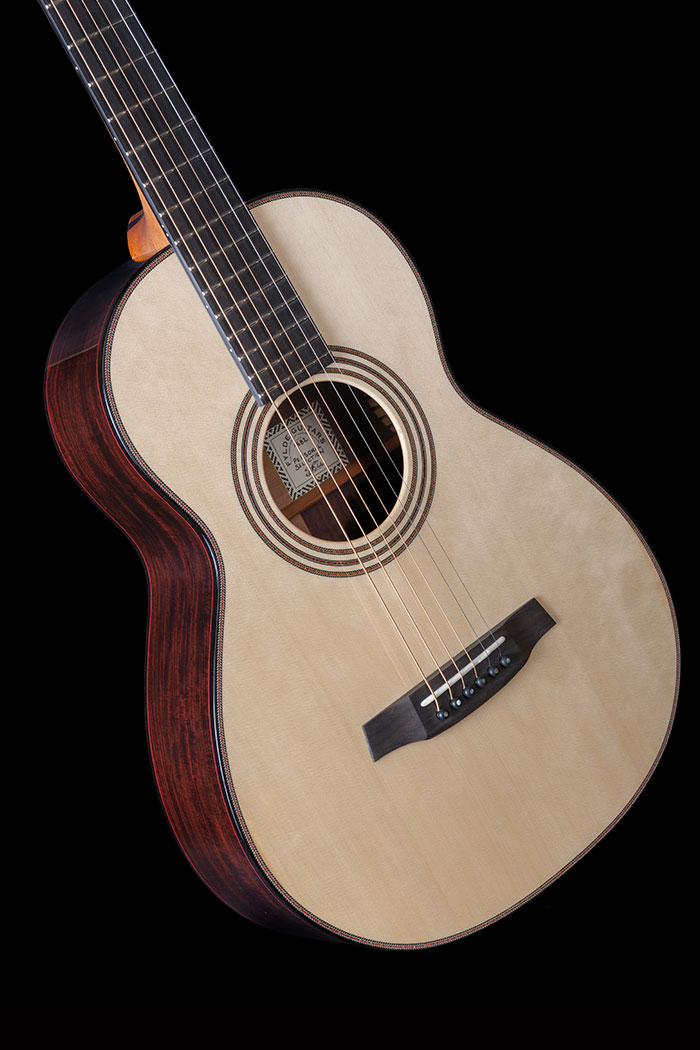
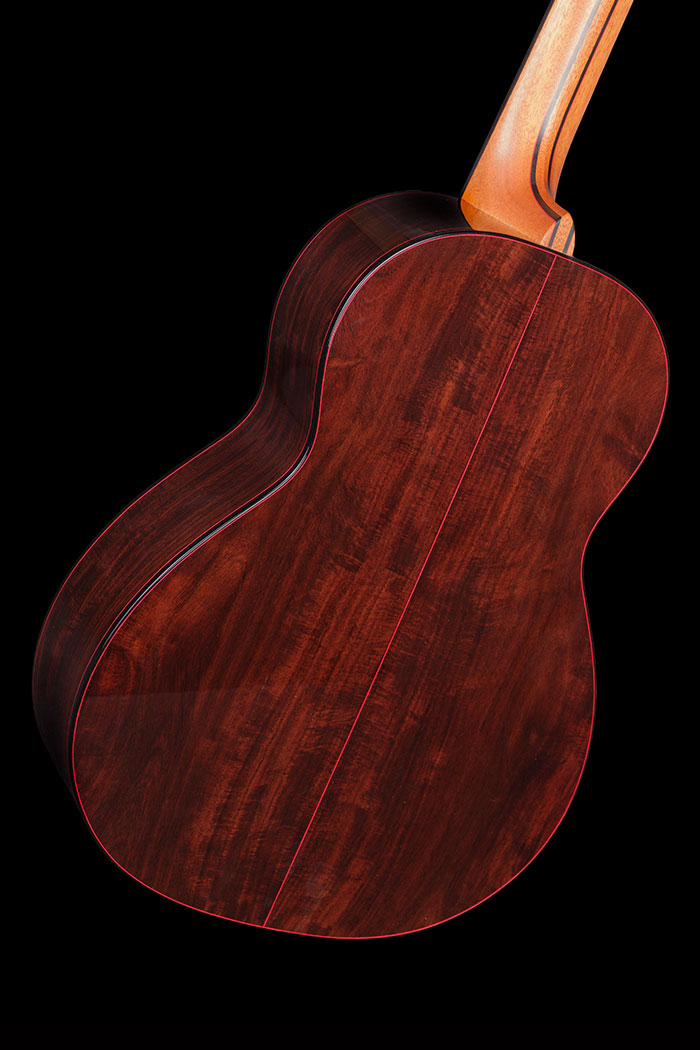
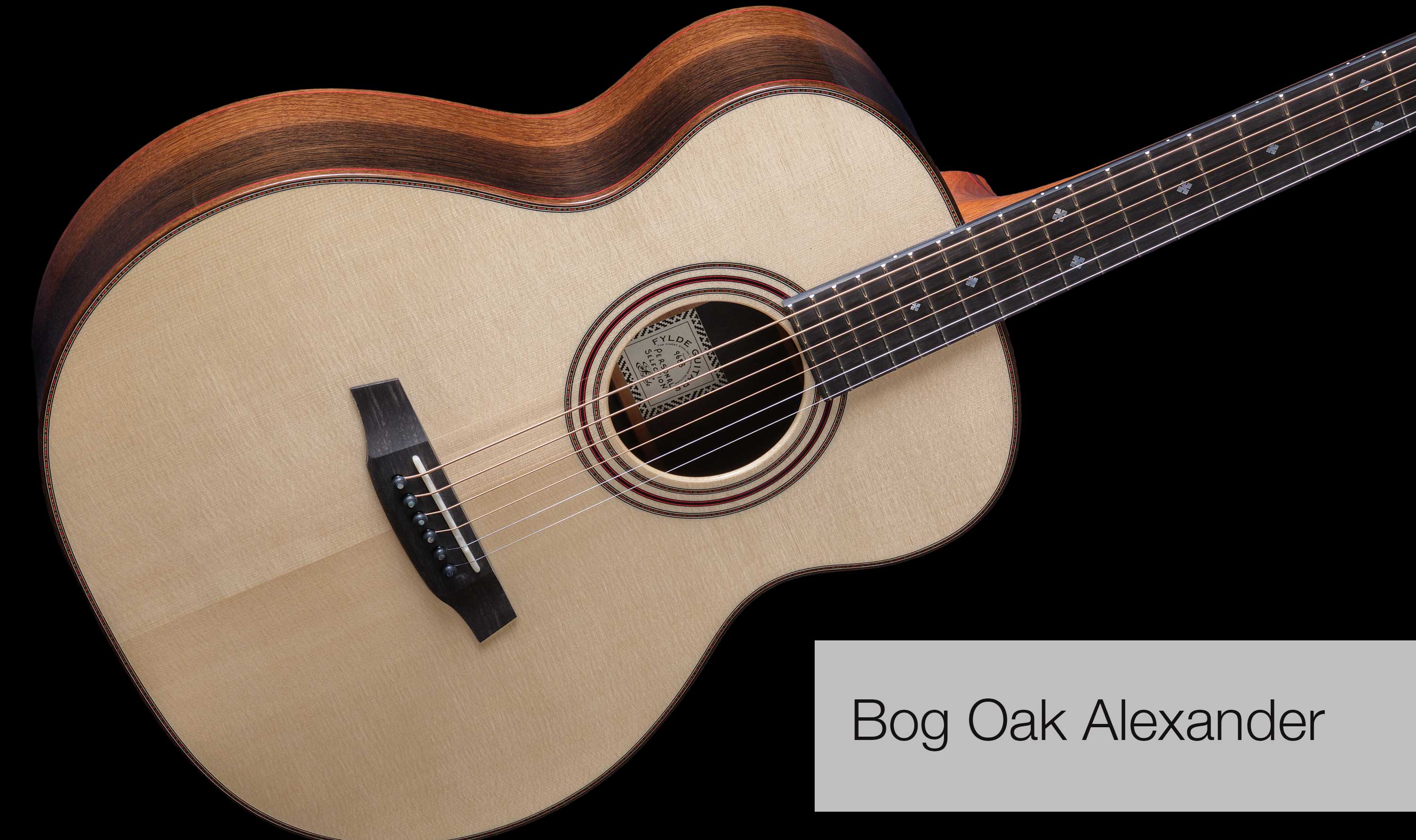
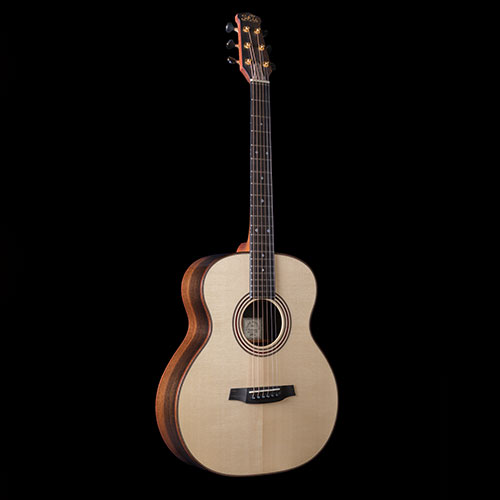
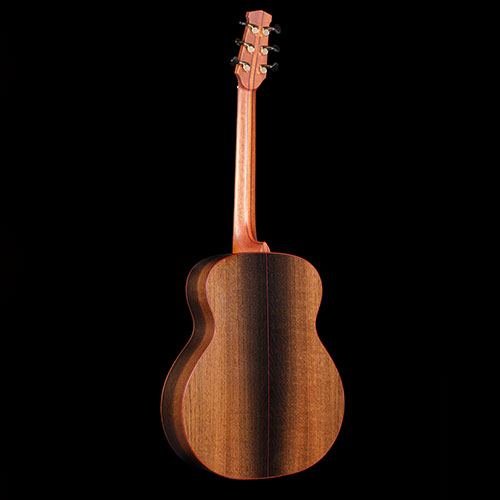
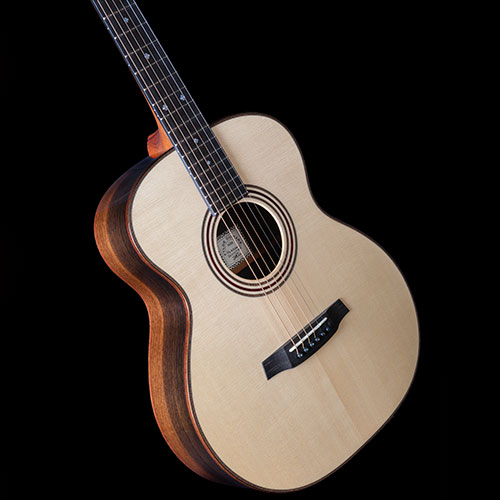
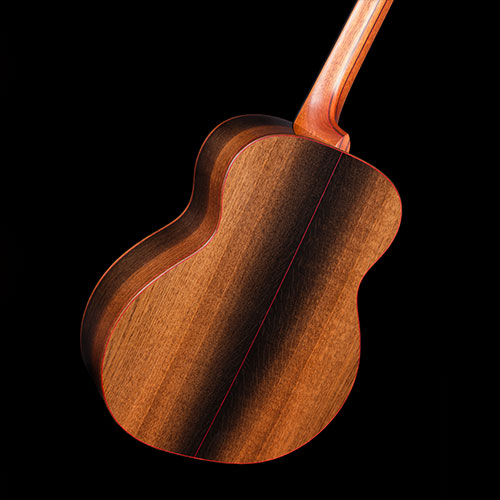
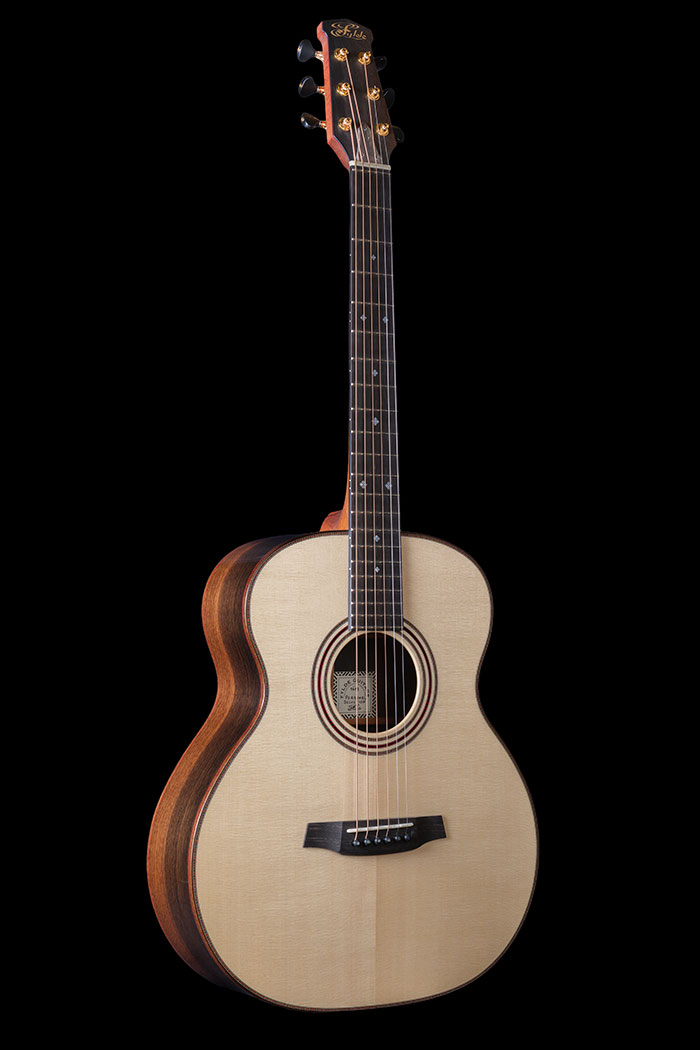
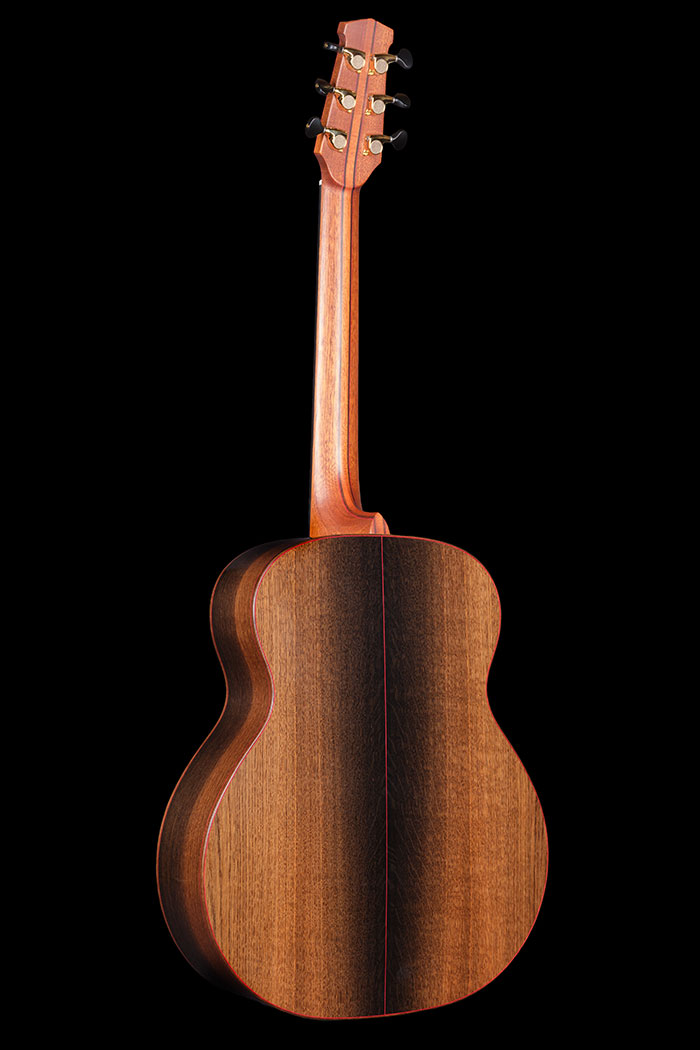
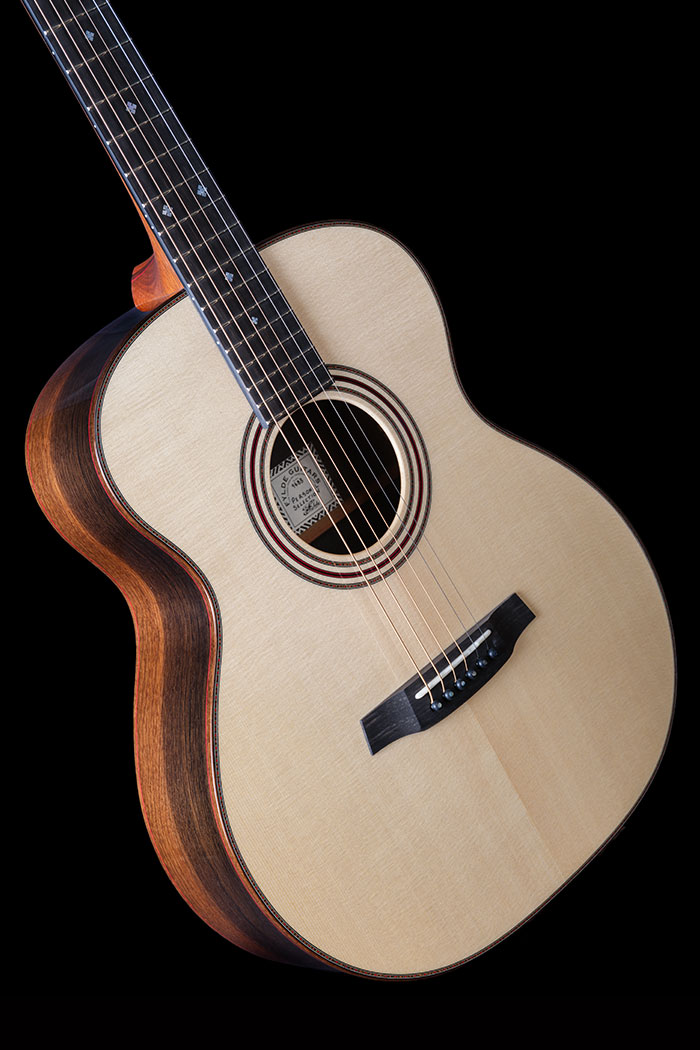
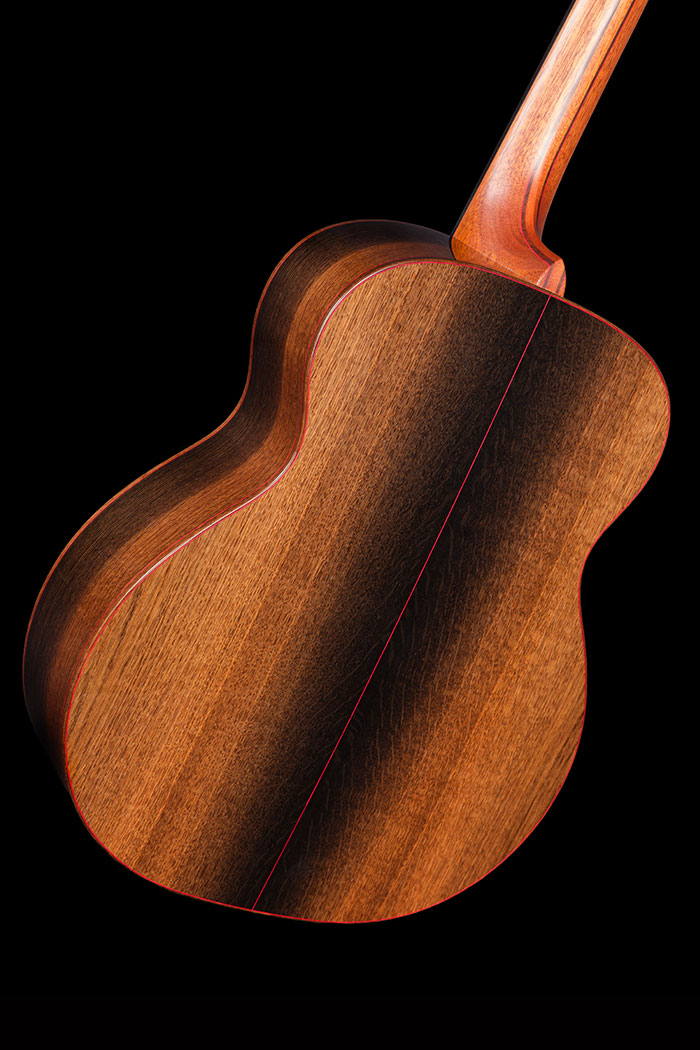
Falstaff size, very slightly shallower body. African Blackwood back and sides. Adirondack Spruce soundboard.
Otherwise, very simple indeed. It doesn't need anything extra.
Ben wanted a scratchplate but I didn't. I won. If the pick marks ever get bad enough to worry about, well, we will know where to fit the pickguard wont we?
Ben isn't having a pickup in this guitar, for the time being he intends this to be 100% acoustic, and from what we have heard so far, he is going to be very pleased indeed.
He is already planning some video recordings as soon as he gets it so I'll be using those in upcoming newsletters.
Click on an image to enlarge ...
I'll start off with this one because today is also very cold, and this is fun. I was tempted to use it for my Christmas newsletter, but they didn’t quite get to the end of the song, so I didn’t.
It really must have been hard to play at all in those conditions, I think I can see Jon's fingers getting red and I'm glad they got his new guitar indoors quickly. Fingers fix themselves, guitars don't.
It's so good for us to see young players adopting Fylde instruments, it's something that has been important to me for such a long time, and I want it to continue.
I love to hear from Jon, he plays music that has a lot of connections with me, and a lot of shared history around Birmingham.
Jon has a new album of unreleased songs, sessions, outtakes and demos. His lovely custom Falstaff "Gwendolyn" features on eight of the songs.
A Robert Burns Poem about Afton Water in Ayrshire.
Heather does a terrific job on guitar and of course singing this splendid song.She has recently been playing guitar in Kathryn Tickell's band, and several people have mailed to say how much they enjoyed it.
The video is a lovely setting very much like our own garden. I'm fascinated by the little technicalities of recording outdoors, where are all the wires?

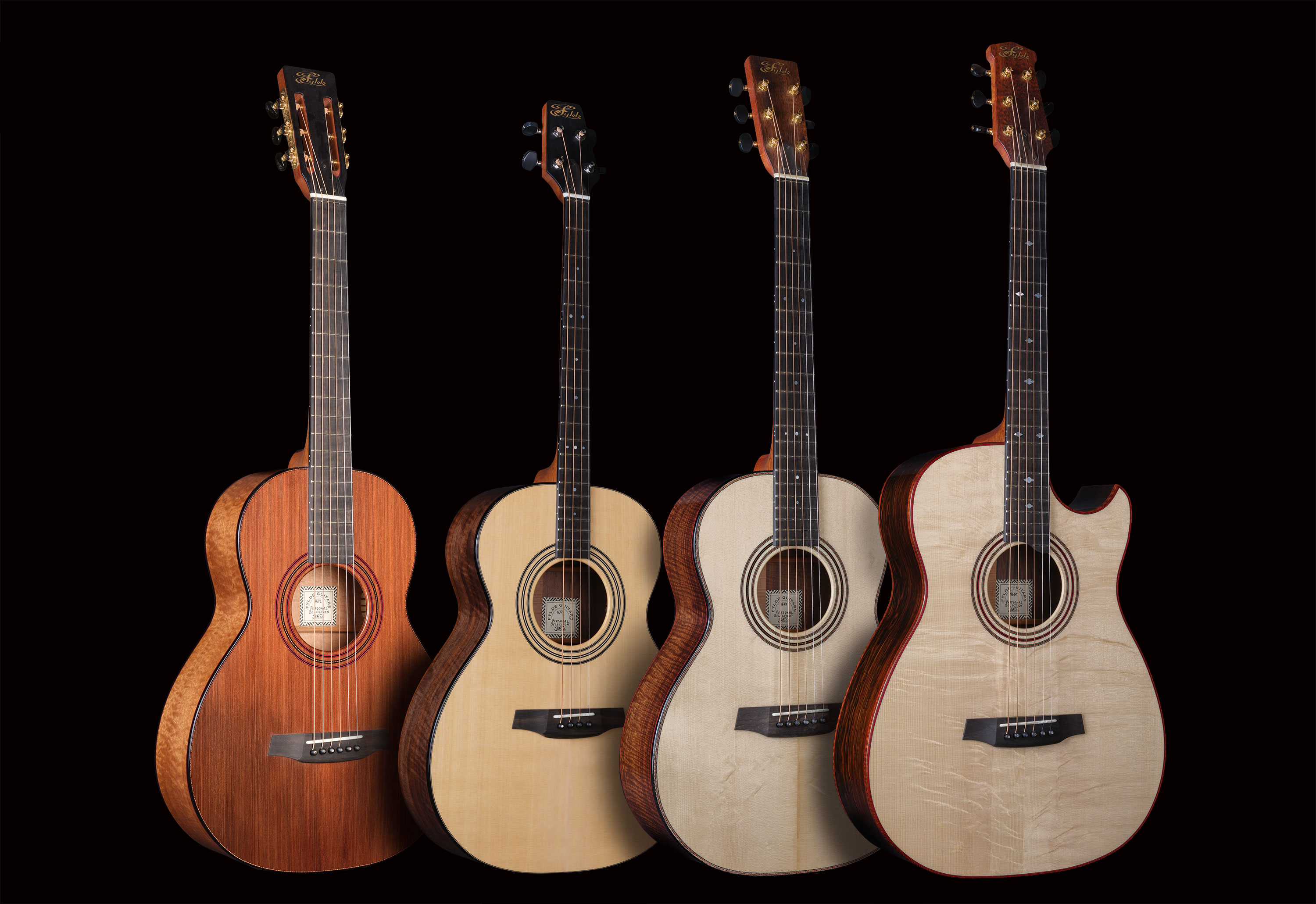
Made in 2007. It's a perfectly standard Falstaff that has seen some serious use but is in excellent structural condition.
The soundboard has a lot of small pick marks, and there is "buckle rash" near the strap pin, so it’s difficult to set a price, but in the ways that really matter, this is an excellent guitar.
Refretted and set up. For sale at £ 2900 .
Click on an image to enlarge ...
We had a visit from Brynn Hiscox himself last week, who told me the long story of trying to keep manufacturing going in the UK. Brynn was originally a guitar maker himself, so we had a lot to talk about. He loved my wood store, and I had to check his pockets on his way out.
Production of the cases in Poland is slowly taking shape, and I hope to have first deliveries very soon.
The other news is that the new Hiscox Music Company, as well as distributing the cases in the UK, are opening a shop which will specialise in UK made gear. Amplification and guitars to start with.
It's early days but keep an eye on the website.
Will says "This guitar has a sound that defies its size …"
That is true, although at least part of the sound actually comes from its small size. It's fairly simple "mechanics"- a small guitar can be built considerably more lightly than a bigger instrument, and by using timbers that are not overly stiff, there isn’t much in the structure that encourages higher overtones. Hence the mellow warm tone that Will manages to produce seemingly effortlessly.
Thanks, Will
And Will has something new to offer ...

"Master expressive Arpeggios to Create Flowing lines and Dynamic Phrases on Guitar"
"Explore how expanding your knowledge and appreciation of arpeggios can add real depth to your fingerstyle playing"
Will has now made three teaching books available, so there isn't any excuse now is there - just a little practice maybe?
Will also has a one-day teaching workshop on 14th March. Click here for more information.
Probably the most well-known of all Gypsy Jazz tunes, played on a Fylde Guitar.
I know that some artists appear in this newsletter quite a lot. The reason is obvious, some of them post a lot of videos, and they pop up on my screen without me looking for them. It's the algorithms you know.
But there are lots and lots of videos of people playing Fylde instruments that I never get to see. I'm constantly searching, but I rely on my customers to send me links .
So, if you have any videos of reasonable quality, with anything related to Fylde, I'd really love to see them.
It's happened again. I didn't know anything about this video until it popped up just eight minutes after Tris uploaded it.
I think it's a game - everybody conspiring behind my back "let’s see if we can sneak one past Rog"
No chance, I rarely sleep.
We never tire of Lisa's singing, and this is a lovely setting at the Guinness Storehouse, with strings and backing singers. The sort of live show I wish we could get to see.
This is another video from the concert where Martin's Taran guitar had been kidnapped by the airline, and he used Louis's custom Falstaff for the whole show.
No, I do not have any connections to that airline. It's a thought though.
I'll say it again; I think the Cello is a wonderful instrument in general and in this setting in particular

If you think this guitar looks familiar, it is. We made it in 2019 and it's one of the first "Orleans" models, this one being made from "Mike Waterson's Wood"
Martin has another similar guitar and wanted this one to have a longer scale length and an adjustable neck.
So here we have Martin's new, oldish, guitar. Look carefully and you might notice the rather weird position of the neck joint, resulting from the new scale length. That was not easy to do. Usually, the accuracy of the neck join isn't critical to within a millimetre or so, as we'd usually fit the neck first, then fit the bridge to suit. This time I had to set the neck to exactly meet the saddle position in the existing bridge. Not so easy.
So far, I'd say this a success story so we might have another new model to talk about soon and there is only one possible name.
The New Orleans.
Click on an image to enlarge ...
That is actually what Martin Carthy said when he heard Holly singing , but I thought it made a lovely headline. She can really play guitar as well.
Holly brought her "new old " Falstaff to have a pickup fitted a few days ago and she has recently recorded some videos with George Sansome. Soon she has some dates singing (and playing) with George, so we have masses to look forward to.
What did I say about new young players? We’ve known George for a while but Holly is a new friend. Don’t they work well together? I think this is a lovely video.
There seems to be something new happening in traditional music, songs I haven’t heard before getting a treatment entirely in keeping with musical history but with a fresh feel.
The future is safe!
Holly and George start a short tour in about three weeks. Let’s hope they manage bigger tours before long. Dates and venues are here.
I’ve just heard that Martin isn’t well and his farewell tour has been cancelled.
That’s very sad news. Martin and his family have brought enormous pleasure to so many people. This video lifted me a little bit, I think it’s particularly joyful.
I’m sure I will be posting more in future newsletters
Massive hugs Martin.
I don't often use videos unless they feature actual playing, but this one has a back story.
The guitar Bridget shows here is a very early Oberon, I don't think it's the one she bought from me, because that one fell off her studio wall in New York and she sent me the pieces. I still have them. I like jigsaws, but …
I think this guitar will be one that I made for our dear departed friend Michael Chapman, he and Bridget were good friends.
I remember the long drive to Derbyshire to deliver Bridget's guitar, and her stories of Nick Drake and John Martyn. Then she moved to America and we didn't see so much of her.
Bridget had a Fylde 12 string as well, which inspired John Martyn to order his.
When I hear the first few notes of this, I hear bagpipes! Really - listen again and see what you think.
But no, it's Jack on his fan fretted Cittern . There aren’t many of those around. He really gets a great sound.
I notice that it's produced by Joe Rusby, Kate's Brother, John Smith's sound man and general good egg, so that’s part of the reason but we have to give most credit to Jacks playing .
Jack and I used to swap stupid jokes. I shall now sit back and wait to hear from him.
I've been battling myself whether to include this video. It's very positive and does explain some of the good points about zero frets although I don’t agree with all of it.
There are several other videos on the same subject as well, but this one includes Tom Sands from the UK so I thought anything that mentions UK guitar making at the moment must be a good thing.
They all get one thing right - that with a zero fret, the open string should sound the same as all the fretted notes.
But there are several things I want to point out. The nut is not just a spacer, it's important that the nut shares the break angle of the string onto the headstock, so that the fret does not carry all the string tension, and friction is minimised. If we were making greater quantities, I'm pretty sure we'd find the conventional nut much easier, so it's certainly not a short cut.
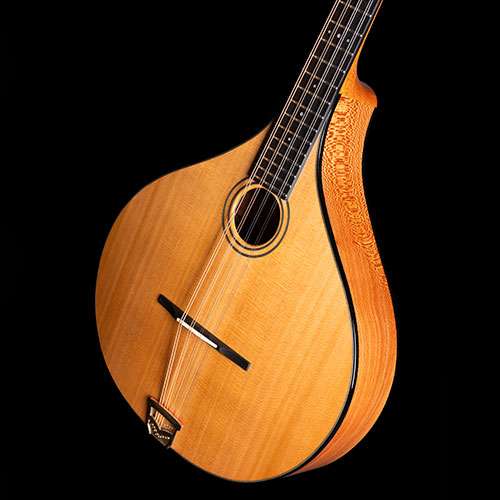
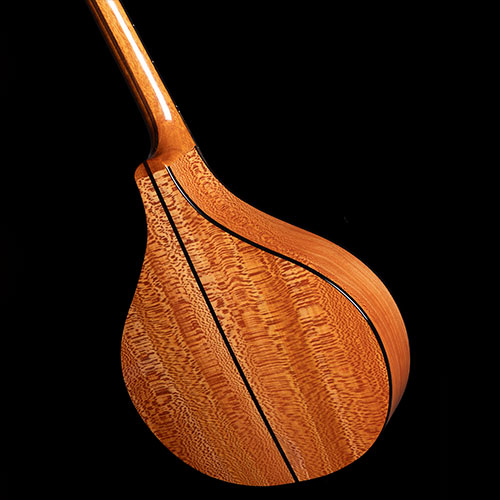
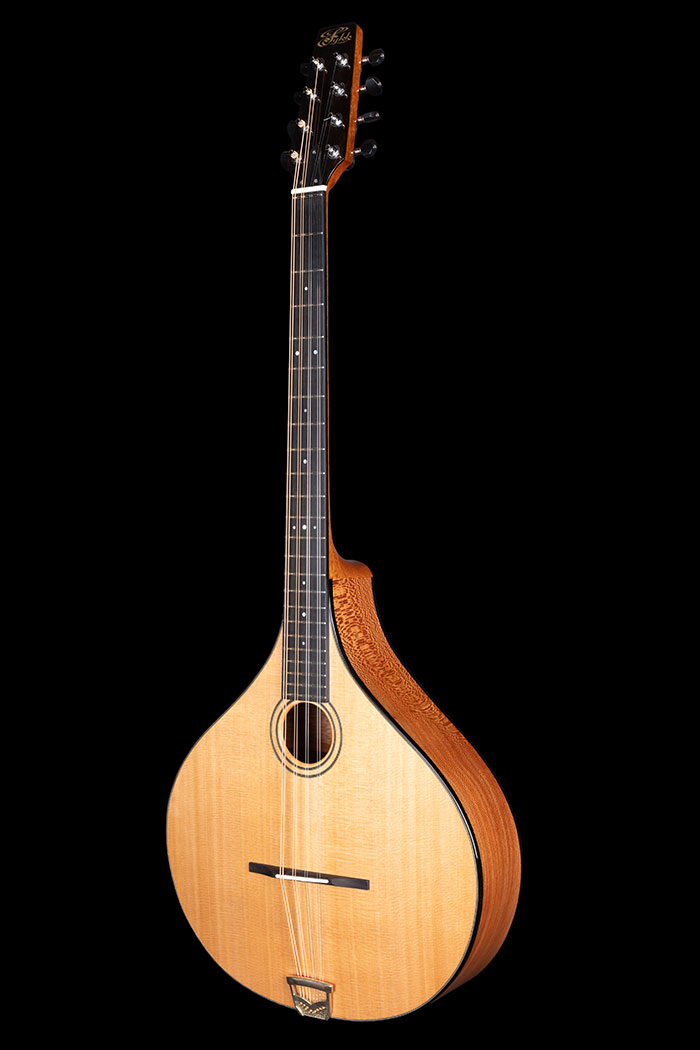
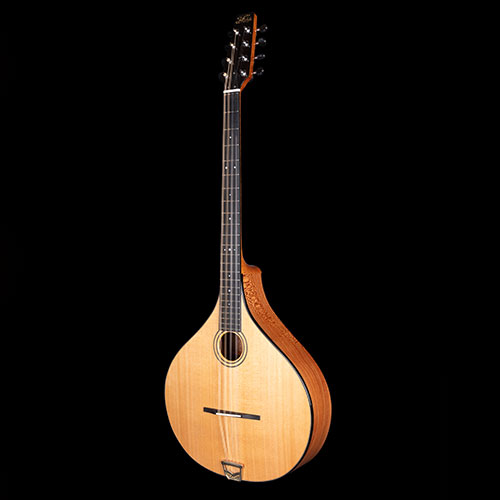
We aim to have the break angle over the zero fret equal or very slightly greater than it would be when fretting any other note. The nut carries the remainder, greater, part of the break angle and pressure from the string, and we cut it very carefully indeed.
It isn't an automatic answer to string height. If anything, it is more difficult to get that right, not less, and it's difficult to keep everything tidy.
In our experience, zero frets do not wear out if they are fitted properly. There, I've said it. It’s almost unheard of for us to have to replace a zero fret unless we are doing a full refret, and we've probably fitted 20,000 zero frets. How many have we had to replace simply due to wear? We can't remember any.
The usual reason for serious marks in the zero fret is careless cutting of the nut.
The other point I like to make should be obvious to anybody that studies the physics of string vibration, and I think it's the most important. With a conventional nut, the string is constrained in a closely fitted slot, which means the string is not free to vibrate as it leaves the nut in the same way as it can when simply resting upon a fret with no sideways constraint.
This is the basis of "inharmonicity", where the higher harmonics in a string are not in simple ratios to the fundamental, because the stiffness of the string becomes an issue at the end of the string where it is held in that tight nut slot. This is called "end effects" and doesn't happen nearly as much on a fretted note. It's the reason the thicker plain strings on a guitar don't sound as pure as thinner strings, and it's part of the reason for tuning and intonation difficulties.
There is so much more I can say about all this, good and bad on both sides of the "discussion". It's not easy to explain but at least the subject is getting more consideration now.
I mentioned this project in November's newsletter last year. The whole idea was based around "Bog Oak" , the very rare but perhaps the most wonderful of the UK's natural treasures.
If you have sharp eyes, at 1.08 in the video, , you might catch a glimpse of the Bog Oak guitar that we made for Rachel. It's being played with a bow!
Thers's a brief glimpse of Pete Townsend as well.
The whole story of the wood, the carving, music and dance is here ...
It’s been a long time since I included Ed. I don’t know how he maintains the energy.
I'm tempted to get a hair do like the guy wobbling about in front of the camera. There are technical reasons why that won't be possible though.
Yes. THAT Gary Neville. The famous Footballer and sometime BBC Dragons Den Judge. He is playing the Alchemist that he bought quite some time ago.
The video is probably the worst quality that I will ever use, there are some quite good photographs of Gary with that guitar on the web, but they are all copyright, and I recently got into a spot of bother when I used an "image" from a newspaper, thinking that nobody would mind little old me borrowing it for a few days.
I was wrong, they did mind and I'm now a bit poorer. Lesson learnt.
Back to Gary Neville. Two other rather well-known players from the same team bought Fylde guitars.Me, talking about football, who'd have thought?
My word. I don't say much about this, but ten years has taken me by surprise. The news about Martin prompted me to include the group picture.
The picture is very special for me. Martin Carthy and Gordon Giltrap, the two people that probably inspired and helped me more than any others, came along to help me celebrate fifty years of professional guitar making. What an honour on top of the shiny badge.
Martin is also holding Norma’s award, and of course his Daughter Eliza has her own. What a family!
We all agreed that the medals make a horrible mess of our pyjamas.
Perhaps it's time we had another party!
See you next month.
Roger.
© 2025 Fylde Guitars. All Rights Reserved